
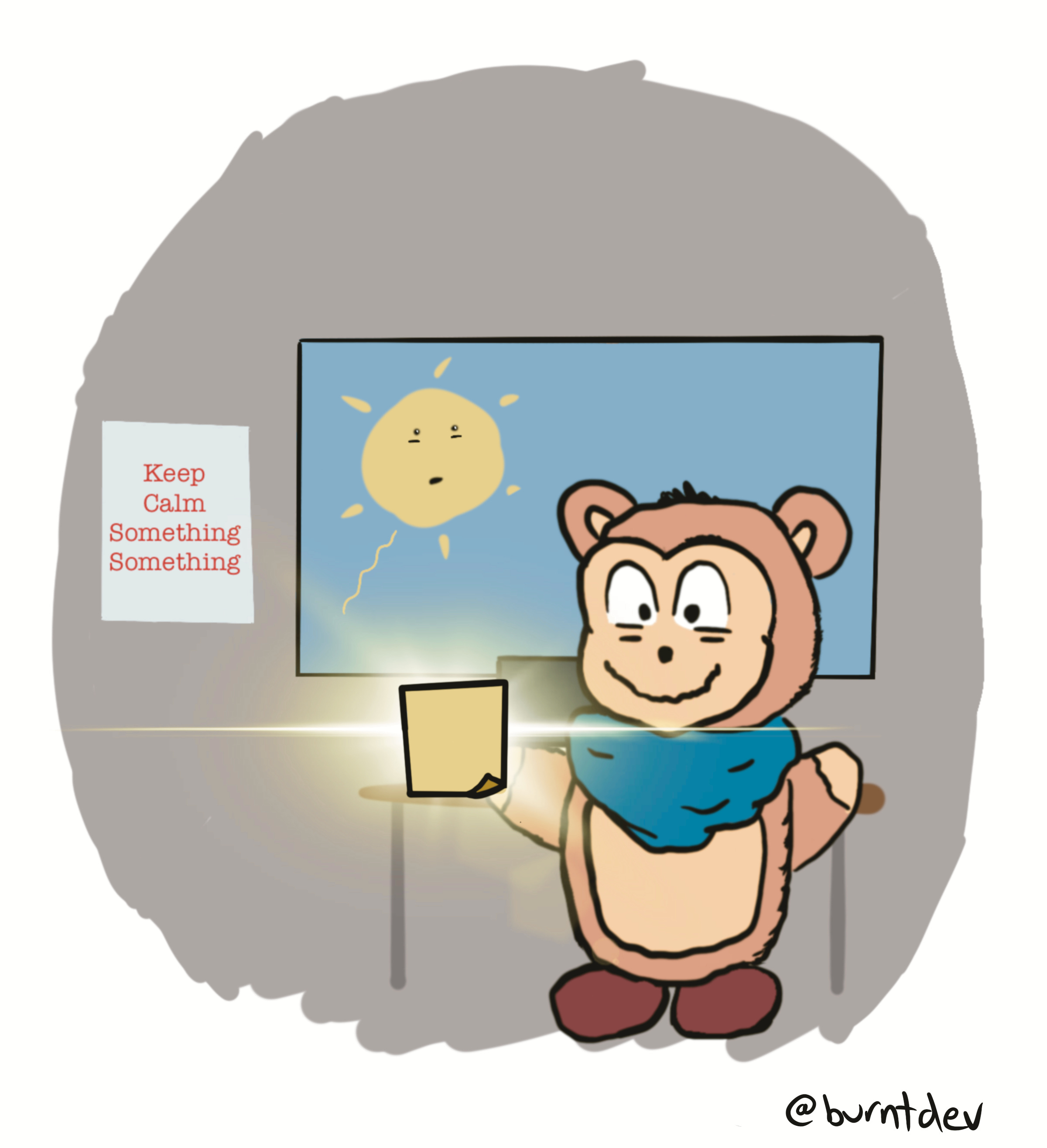
As early as I can remember in my career, I was a rule follower. If someone gave me feedback, I wrote it down on a post-it note.
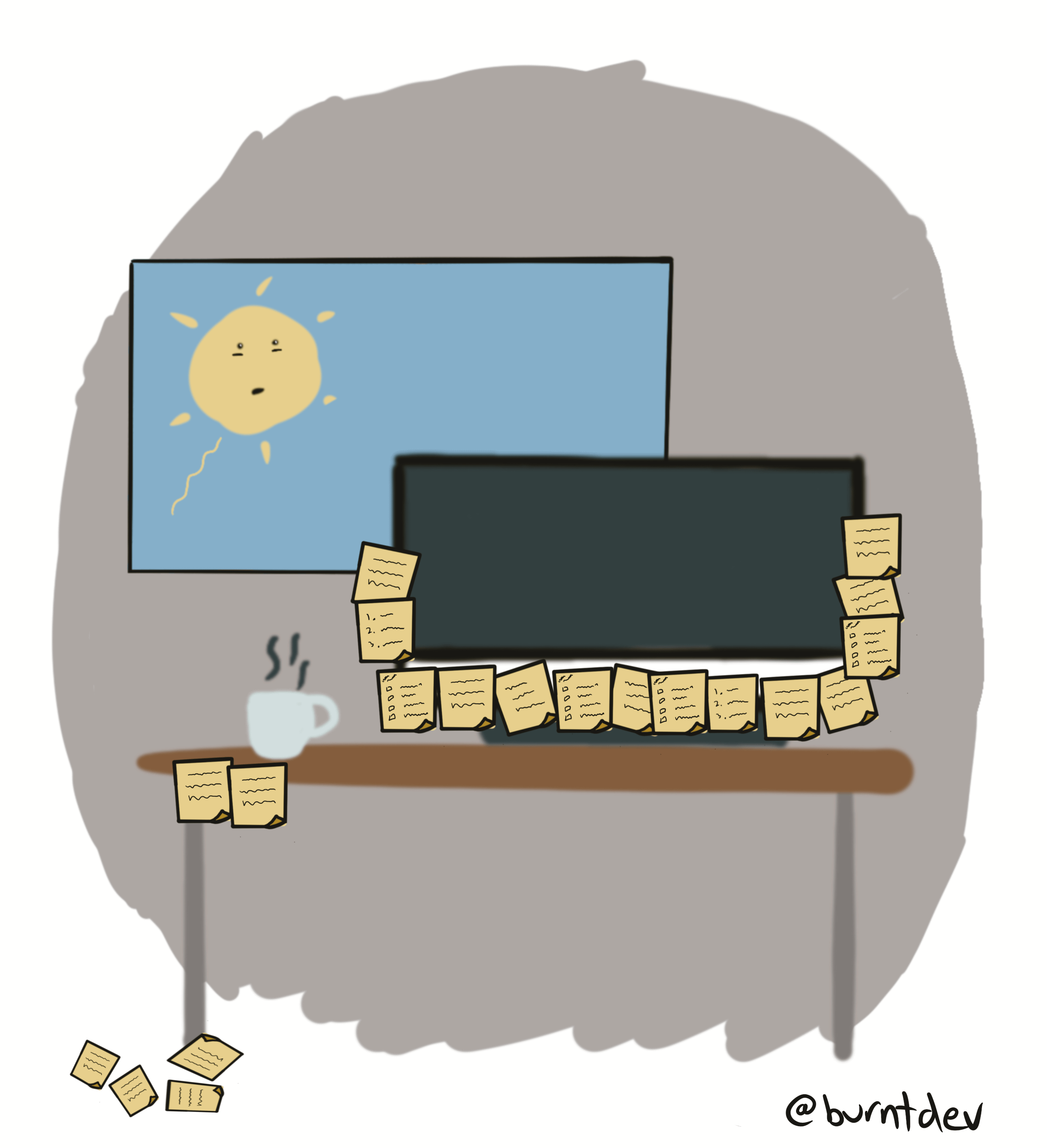
After multiple years, my monitor screen was buried in post-it notes.
I couldn’t trust my own judgement. Had I made my own decisions, I felt the threat of being wrong. I was afraid if I made mistakes, that my peers or manager would “find out” that I wasn’t a good fit. The stakes felt high.
So whenever I wrote a new post-it note, there was a sense of security. Being told what to do felt easier. It felt safer. I ended up mapping post-it notes per situation, as if I was just a walking State-Machine.
The more I sat with it, the more I realized it wasn’t really about the rules. Even though each rule made me feel safer, each promotion reignited that fear of being “found out”.
It feels like a career is a role playing game (RPG), where every time you level up, your antagonist levels up with you. Let’s call this antagonist, “The Problem”.
The Problem

Let me illustrate how a career may look:
Code Monkey, who started as a Jr Level Engineer, is facing a problem for the first time!
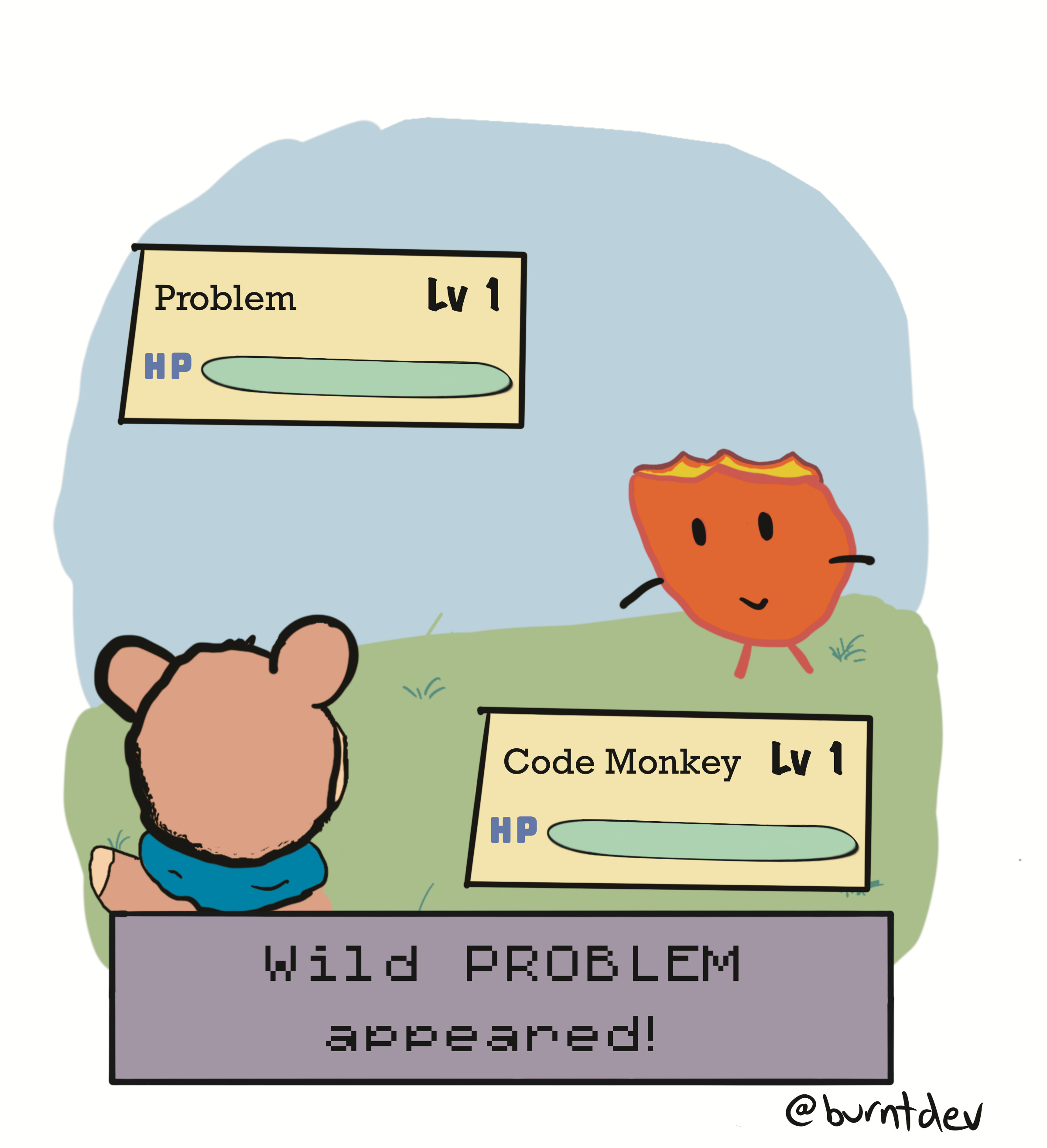
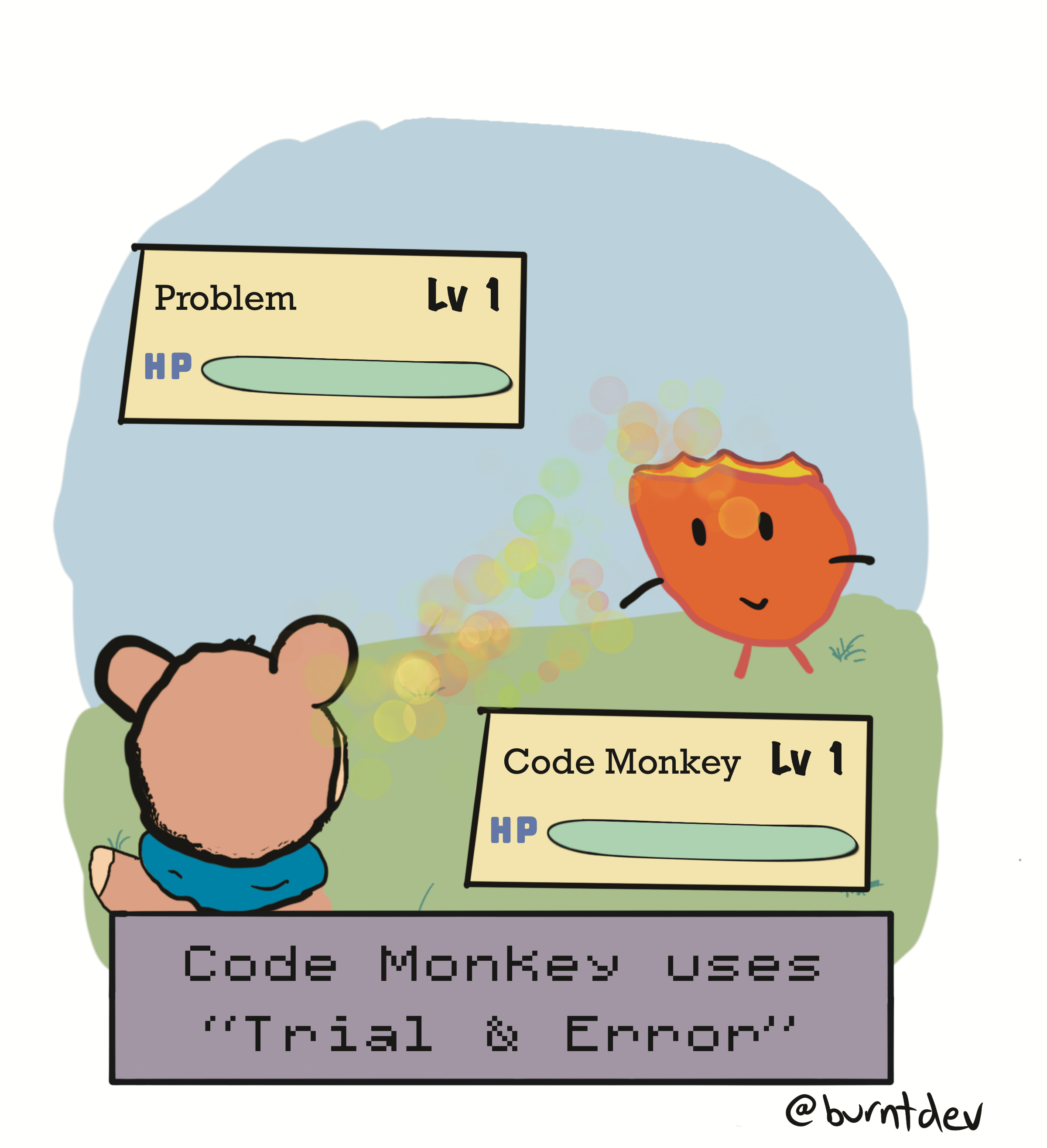
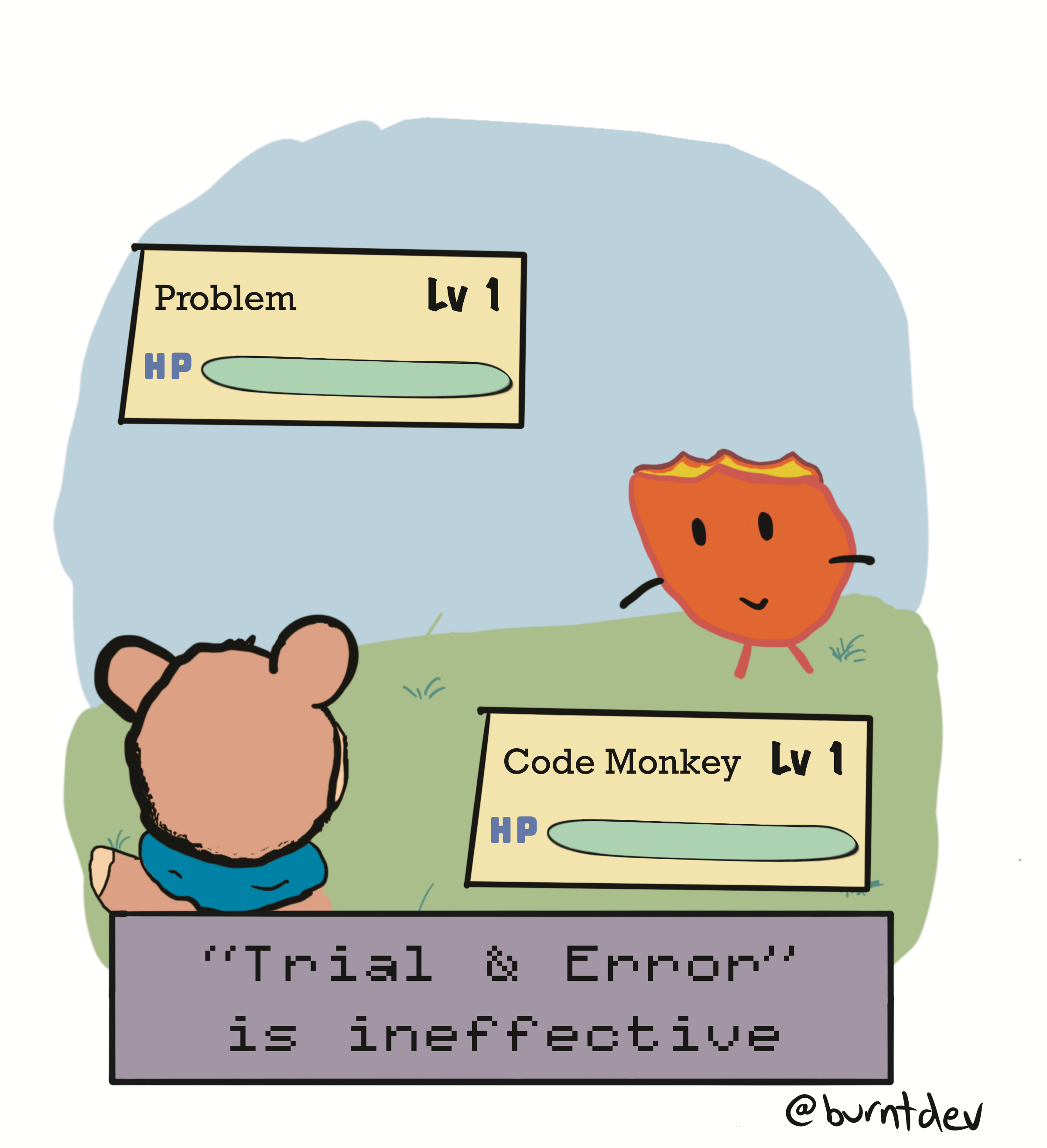
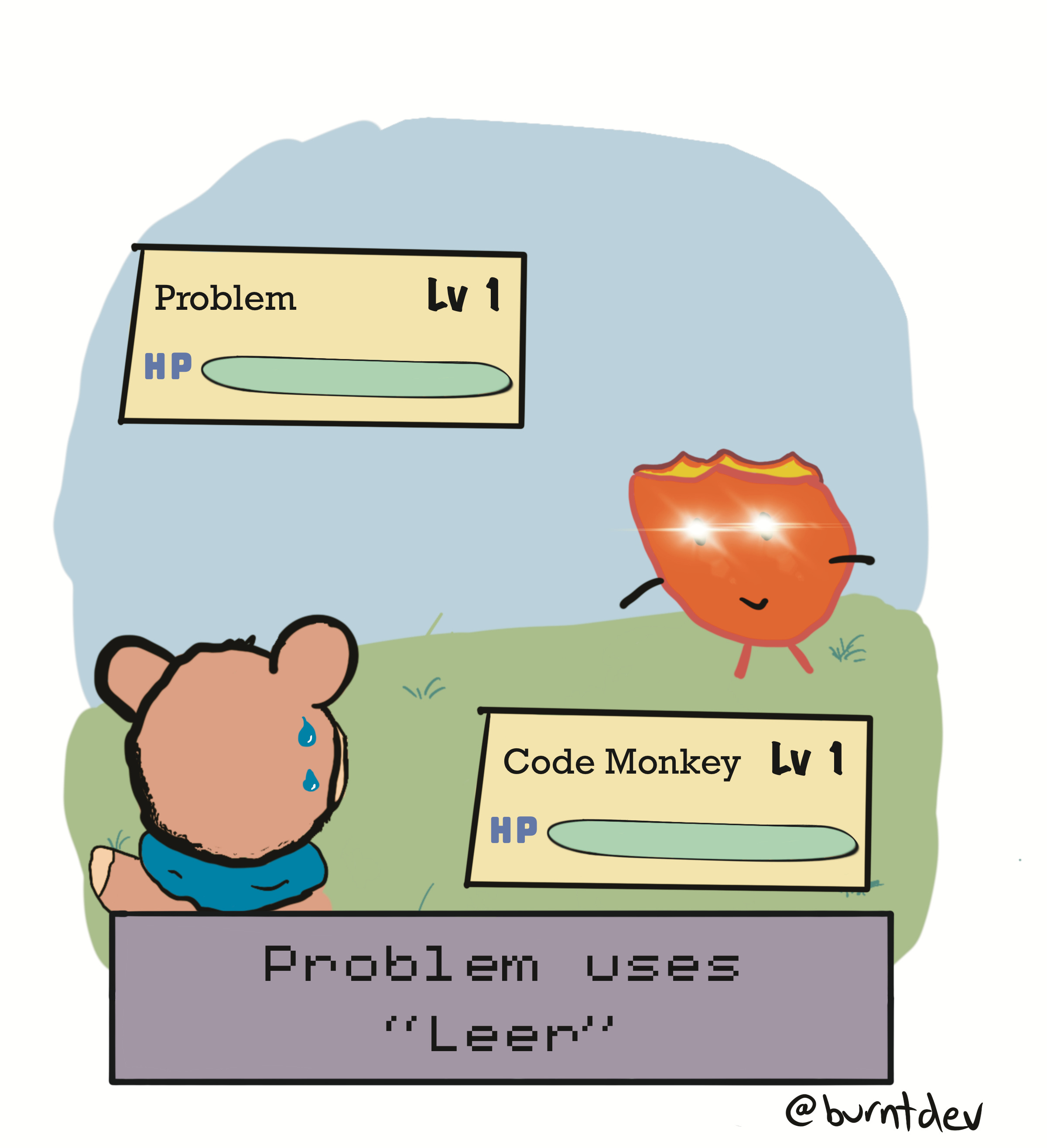
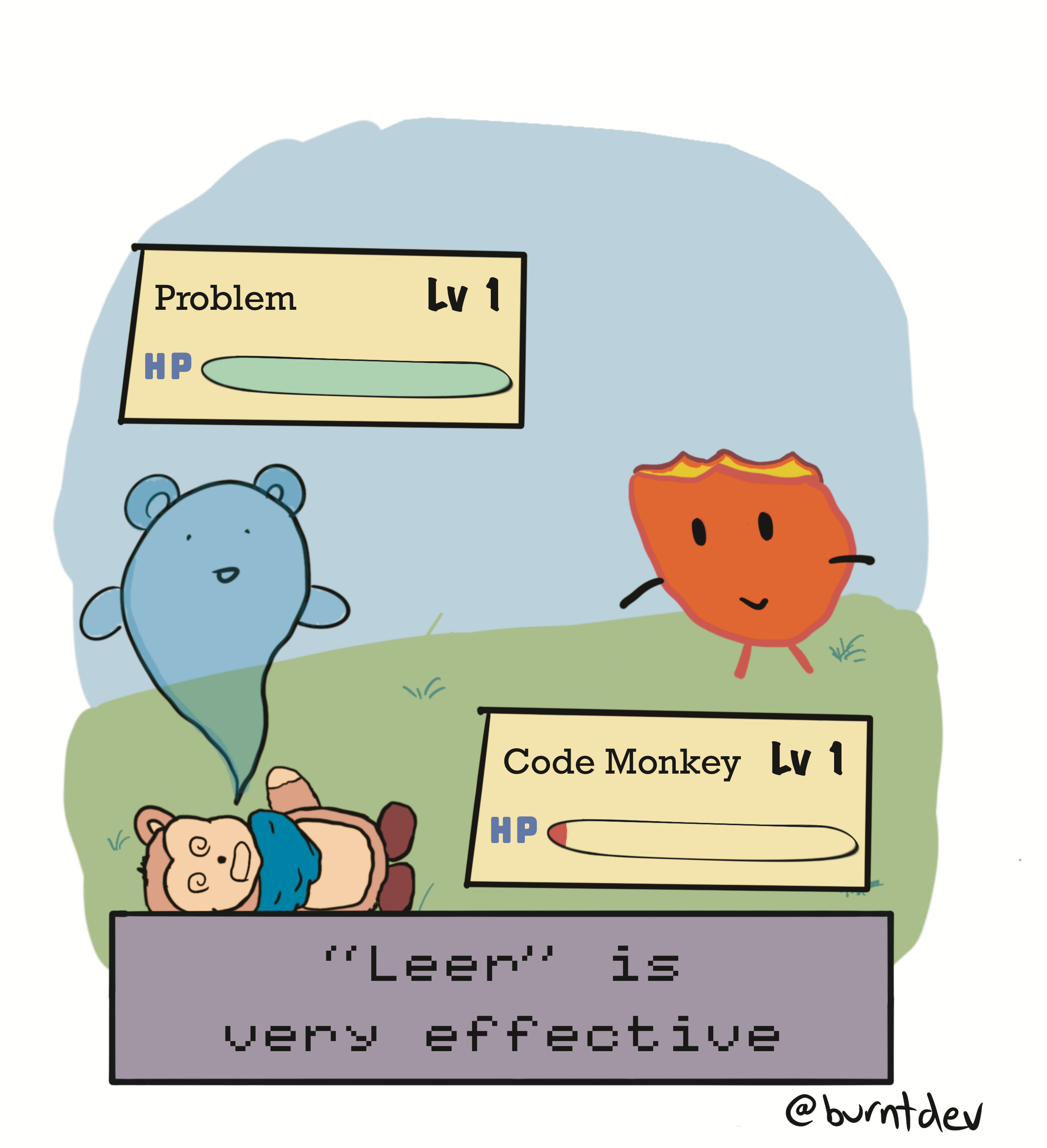
The Problem never swung. It just looked at him, and that was enough.
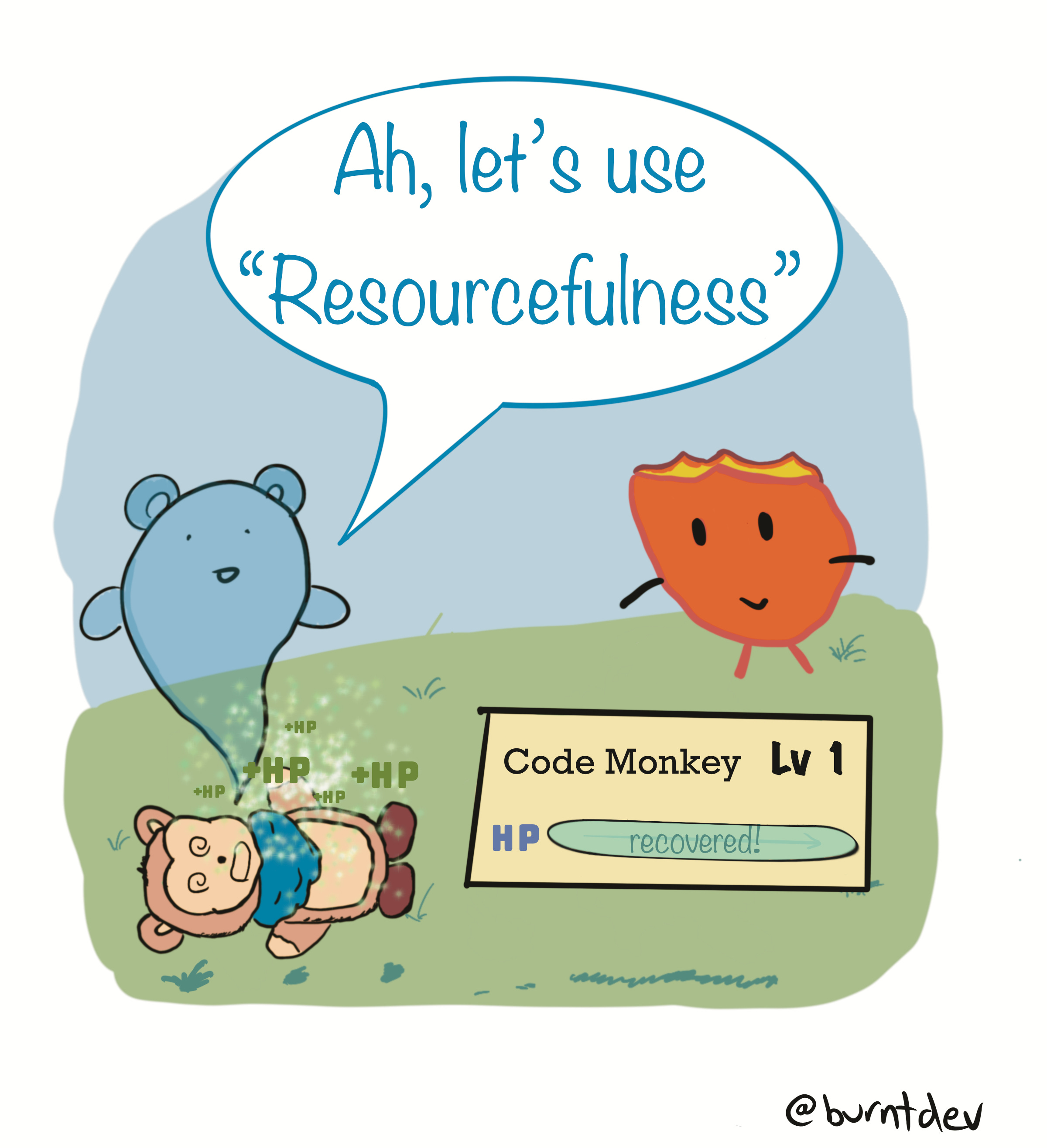
No post-it for this one. He had to learn to trust himself.
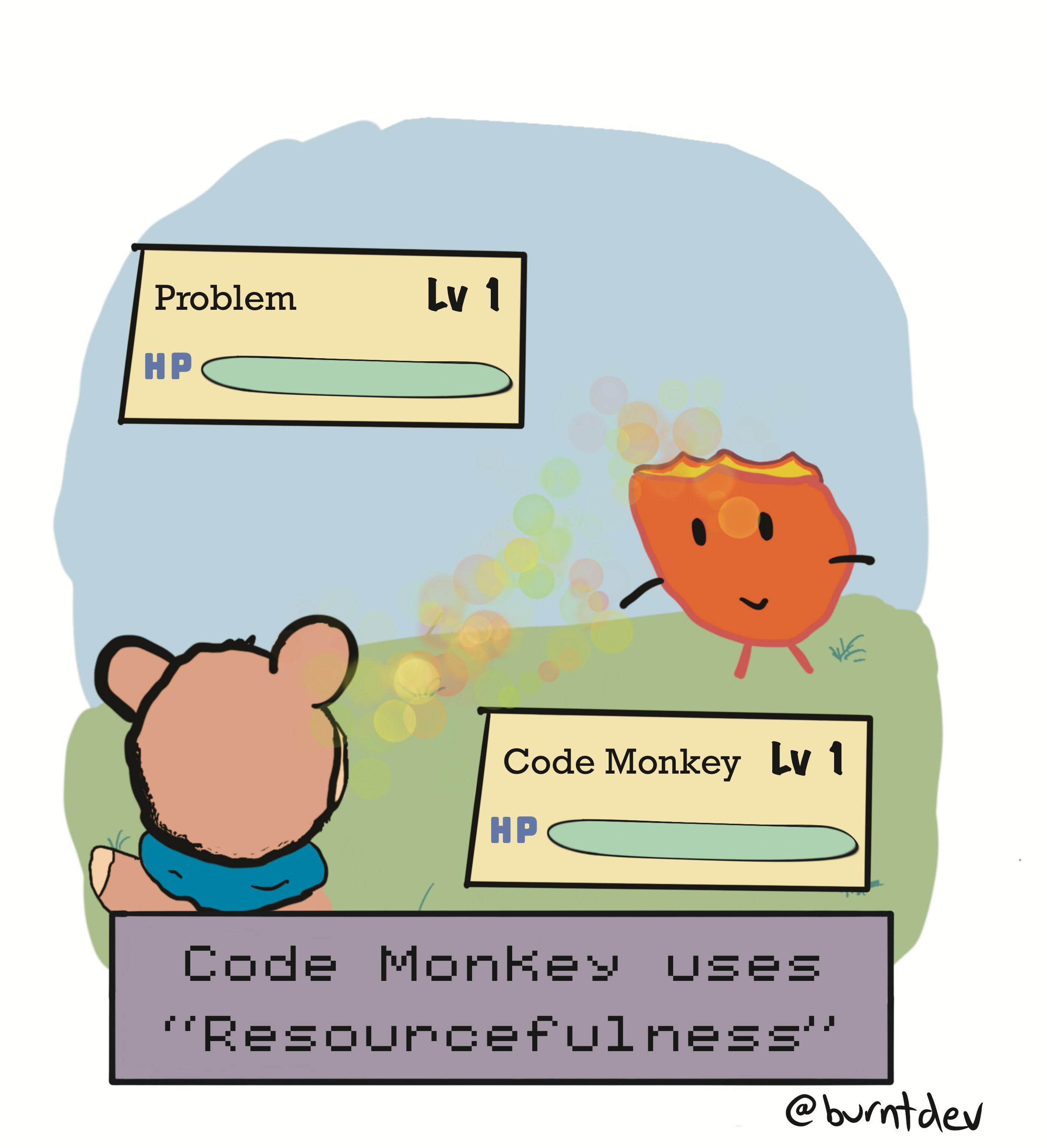
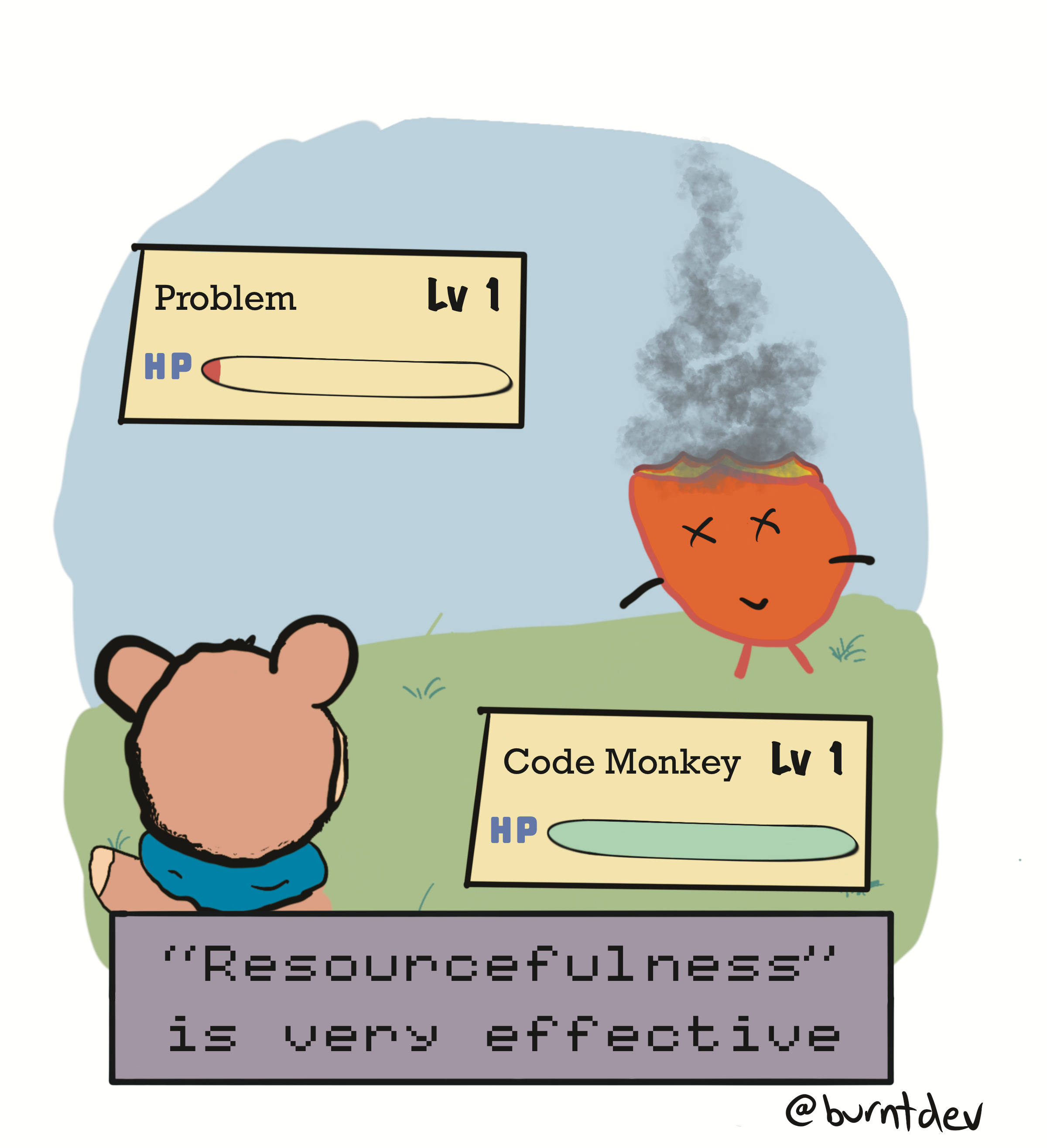
Loop this 6 months to 2 years, one failed attempt at a time.
At some point, Code Monkey is ready for the next level.
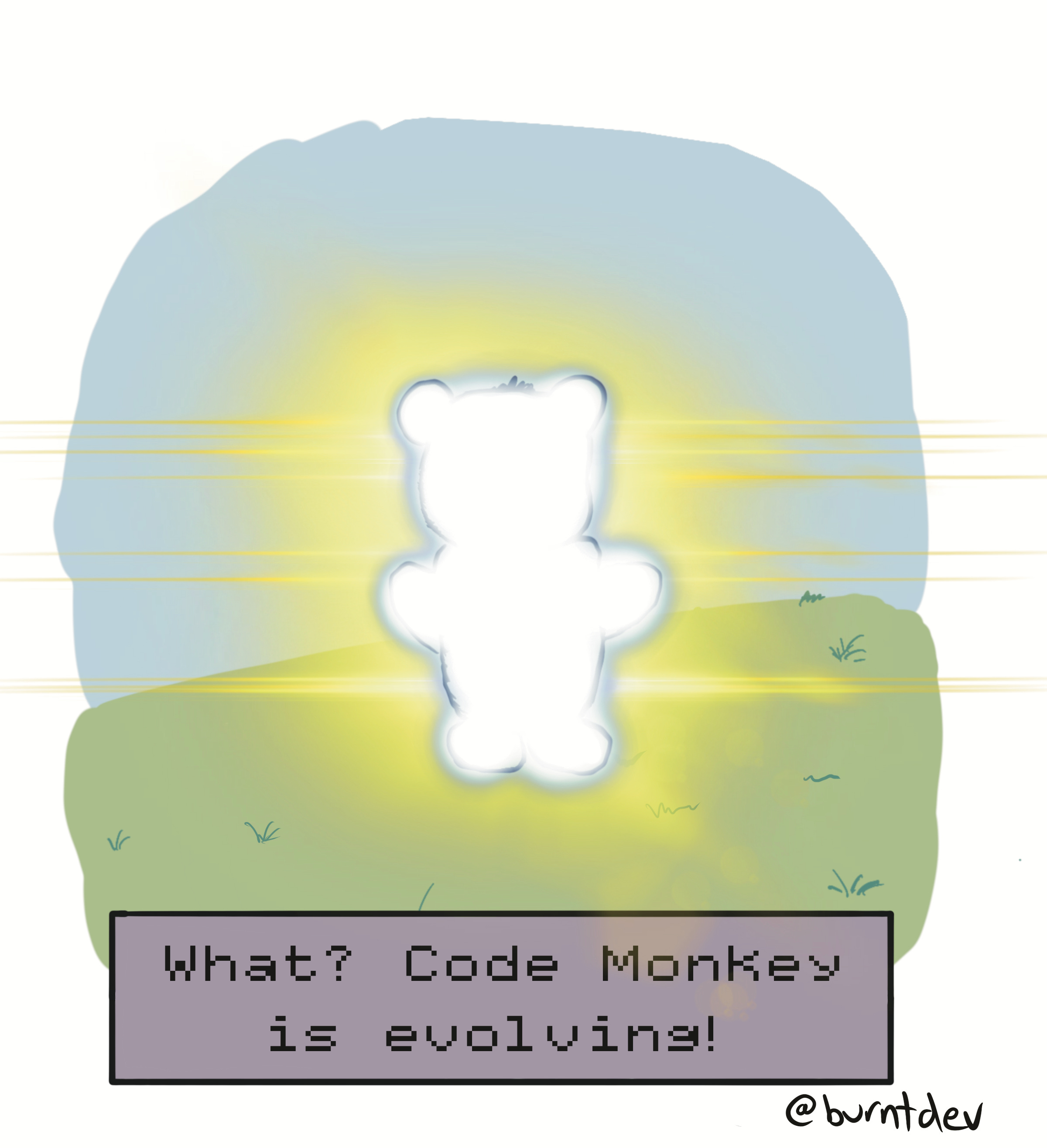
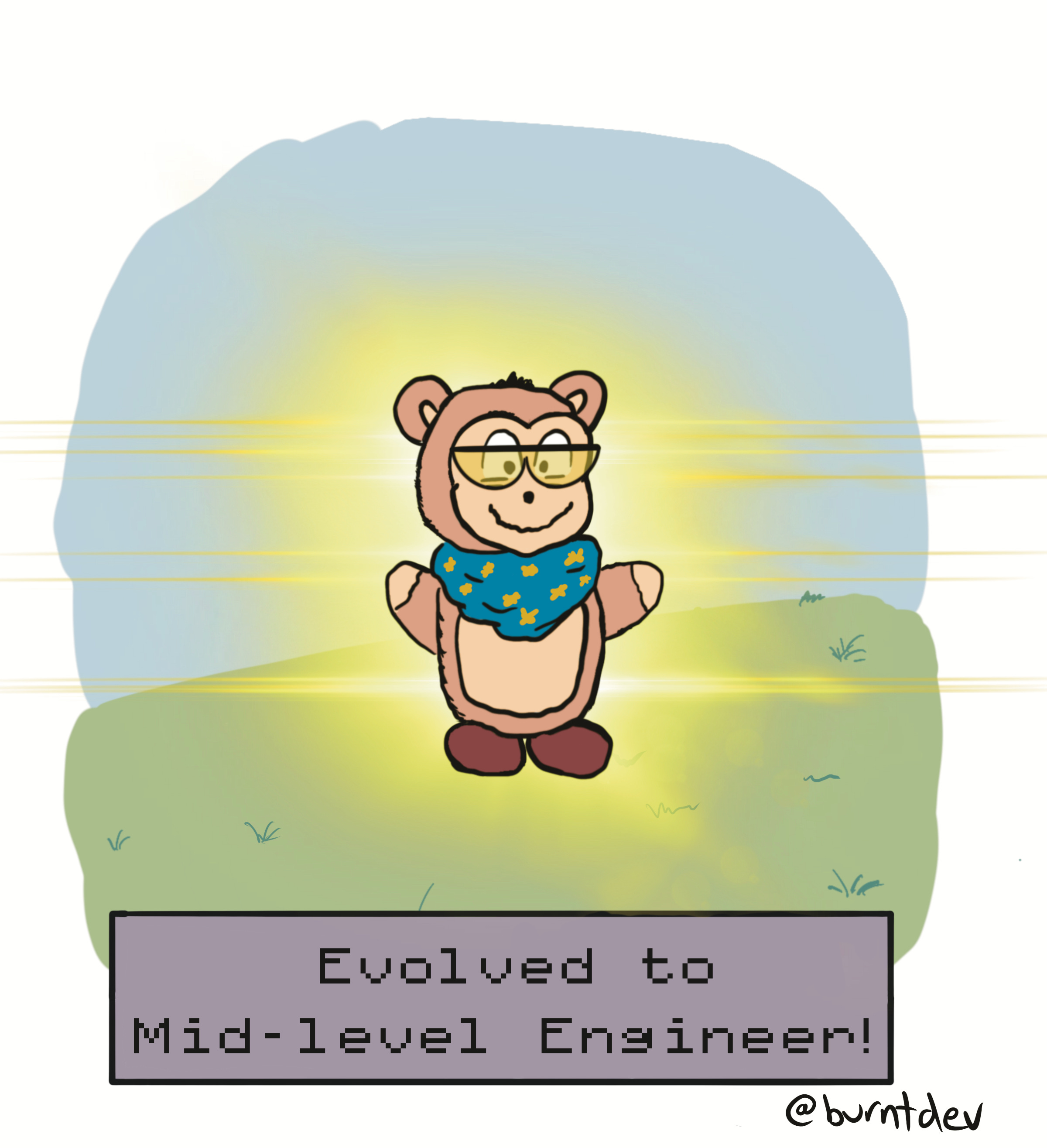
Just like Code Monkey, problems can evolve too.
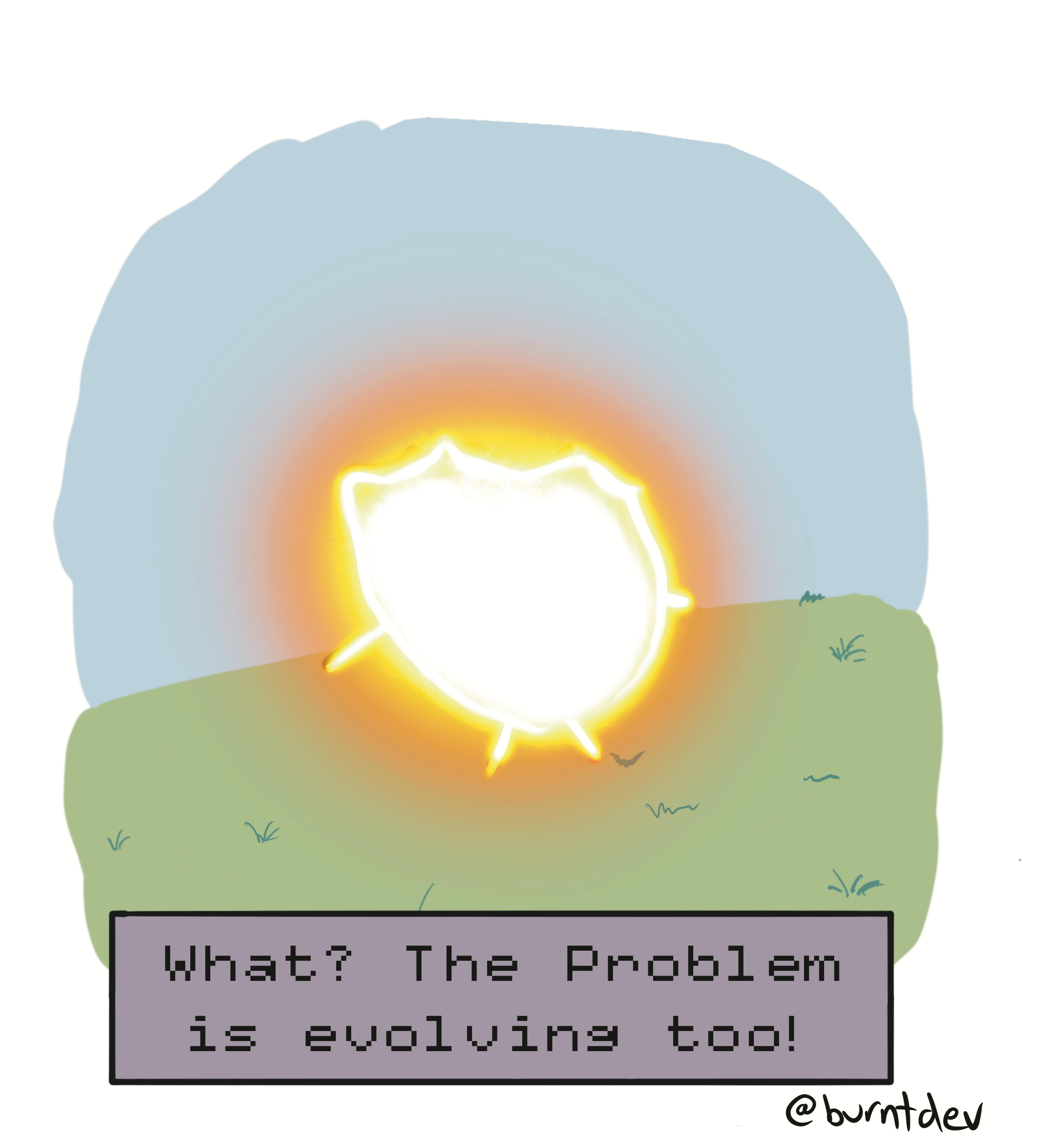
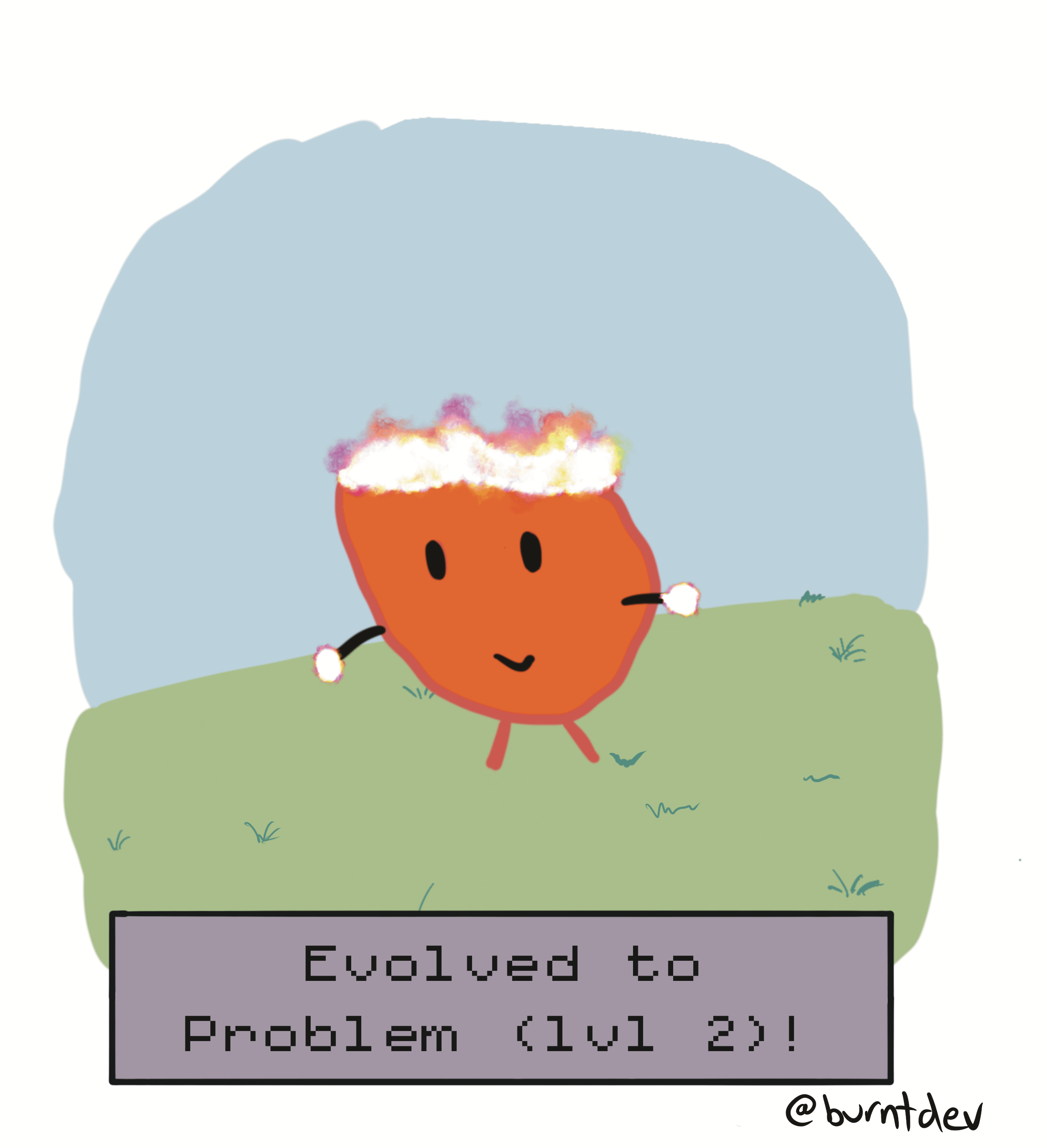
Same move. New Problem.
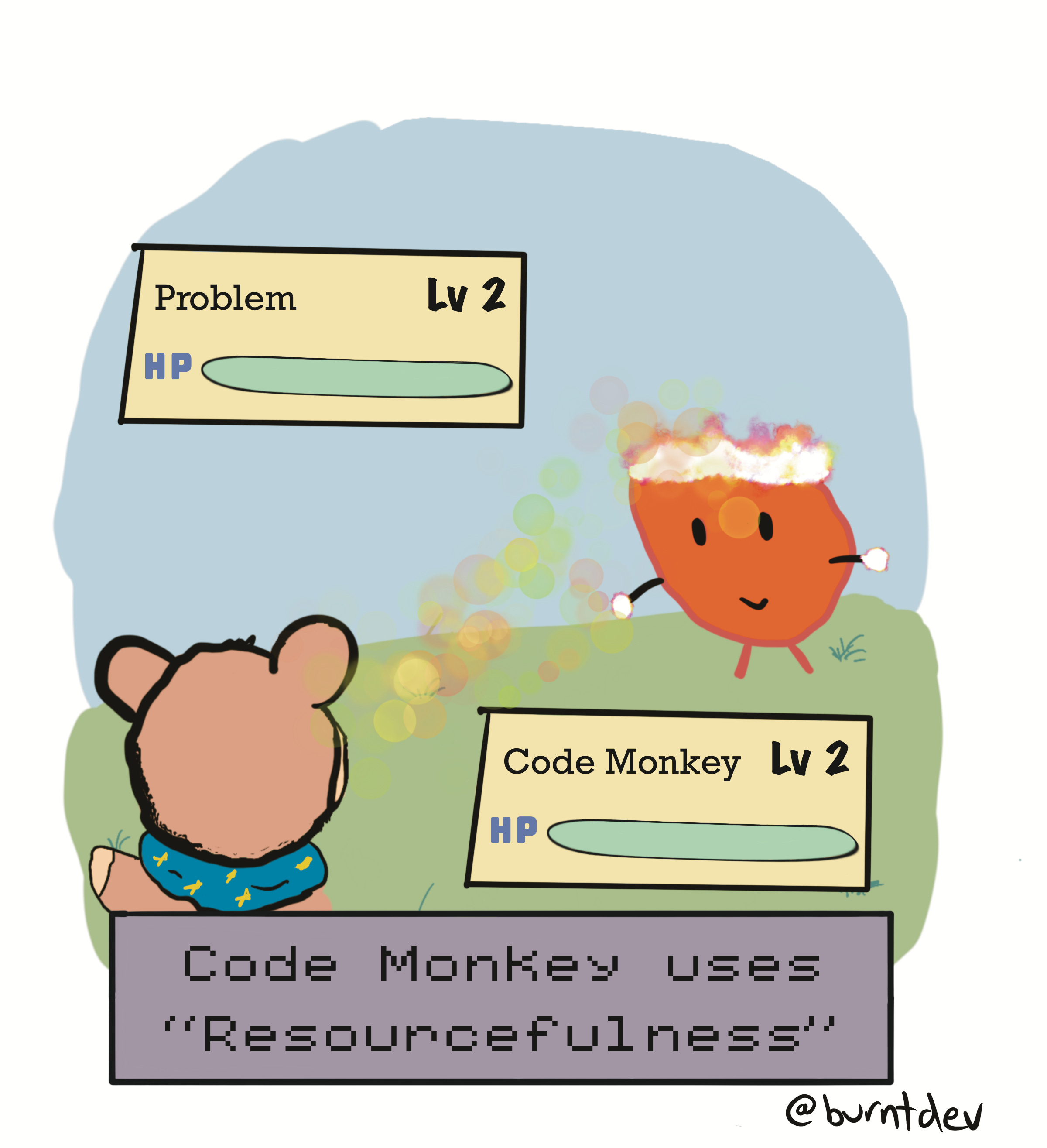
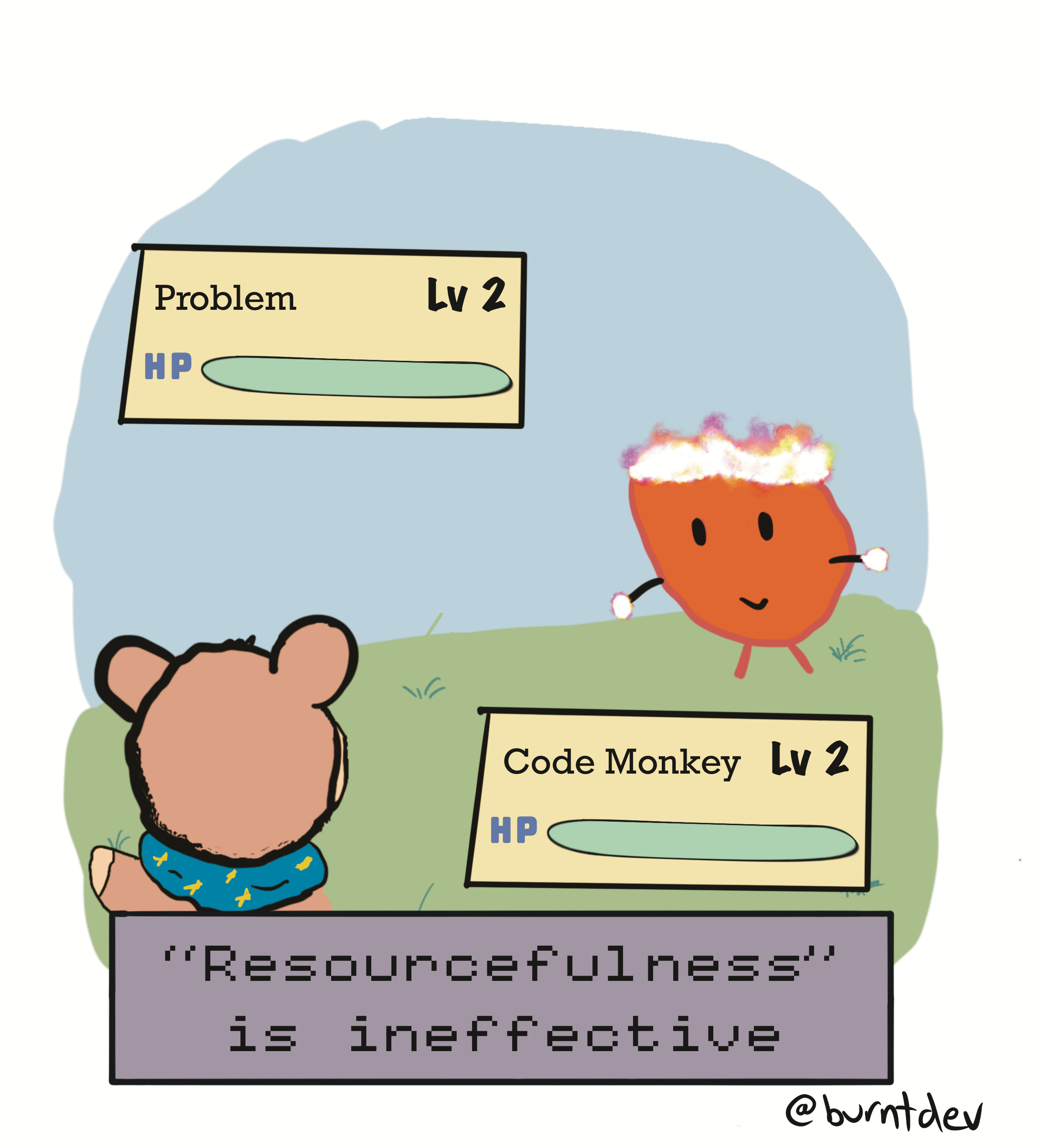
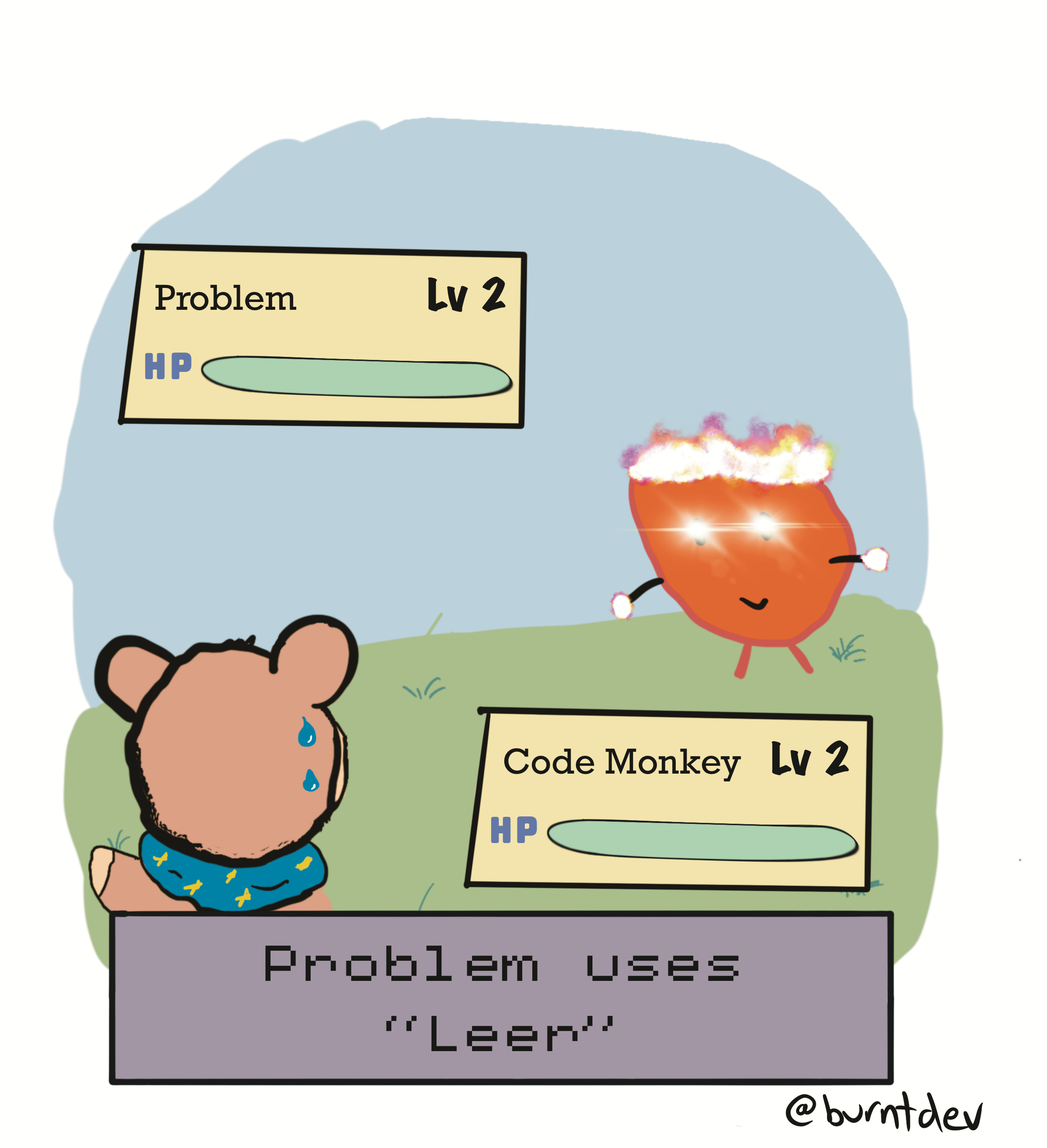
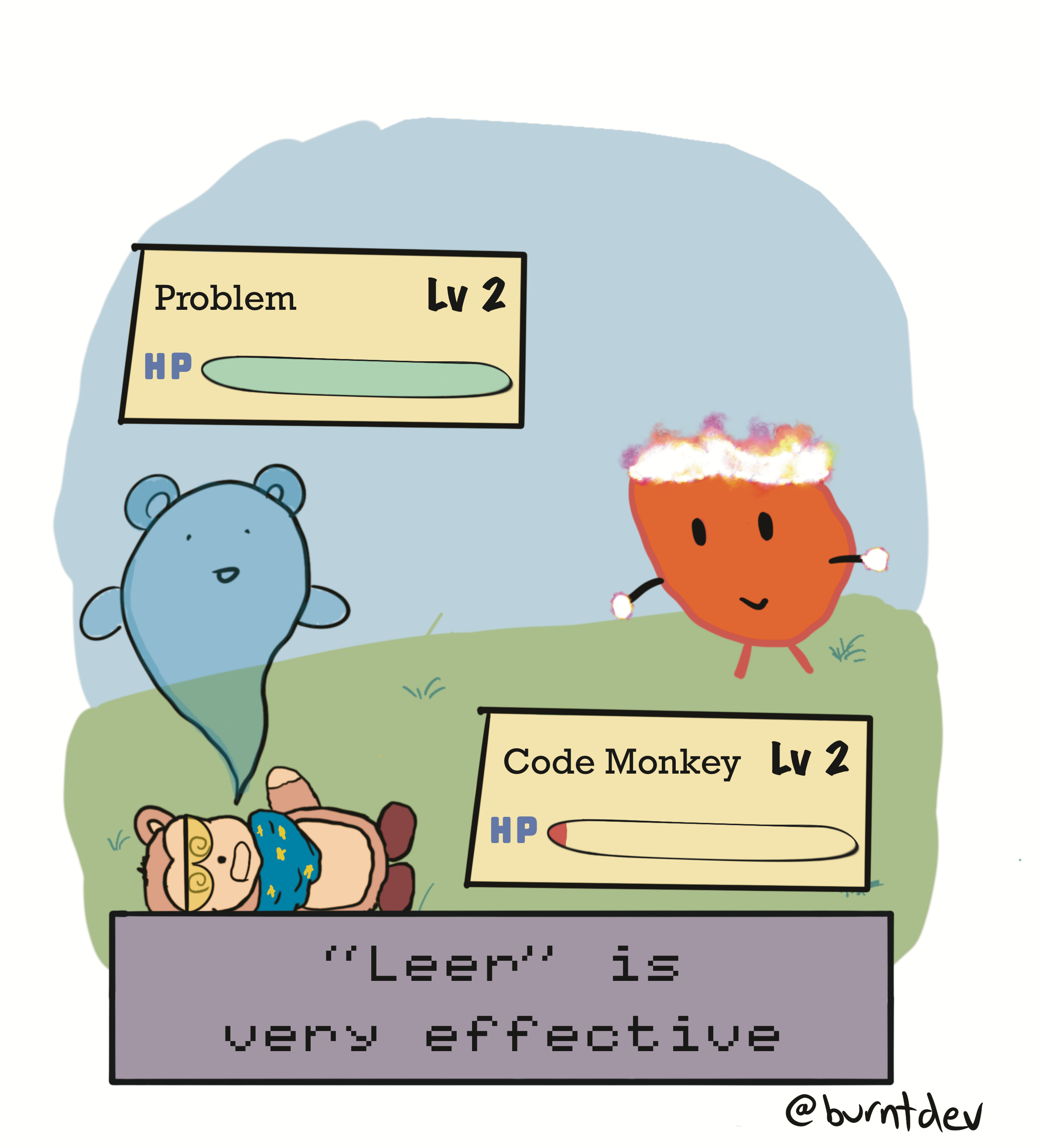
Again with the leer. Code Monkey then learns another skill.
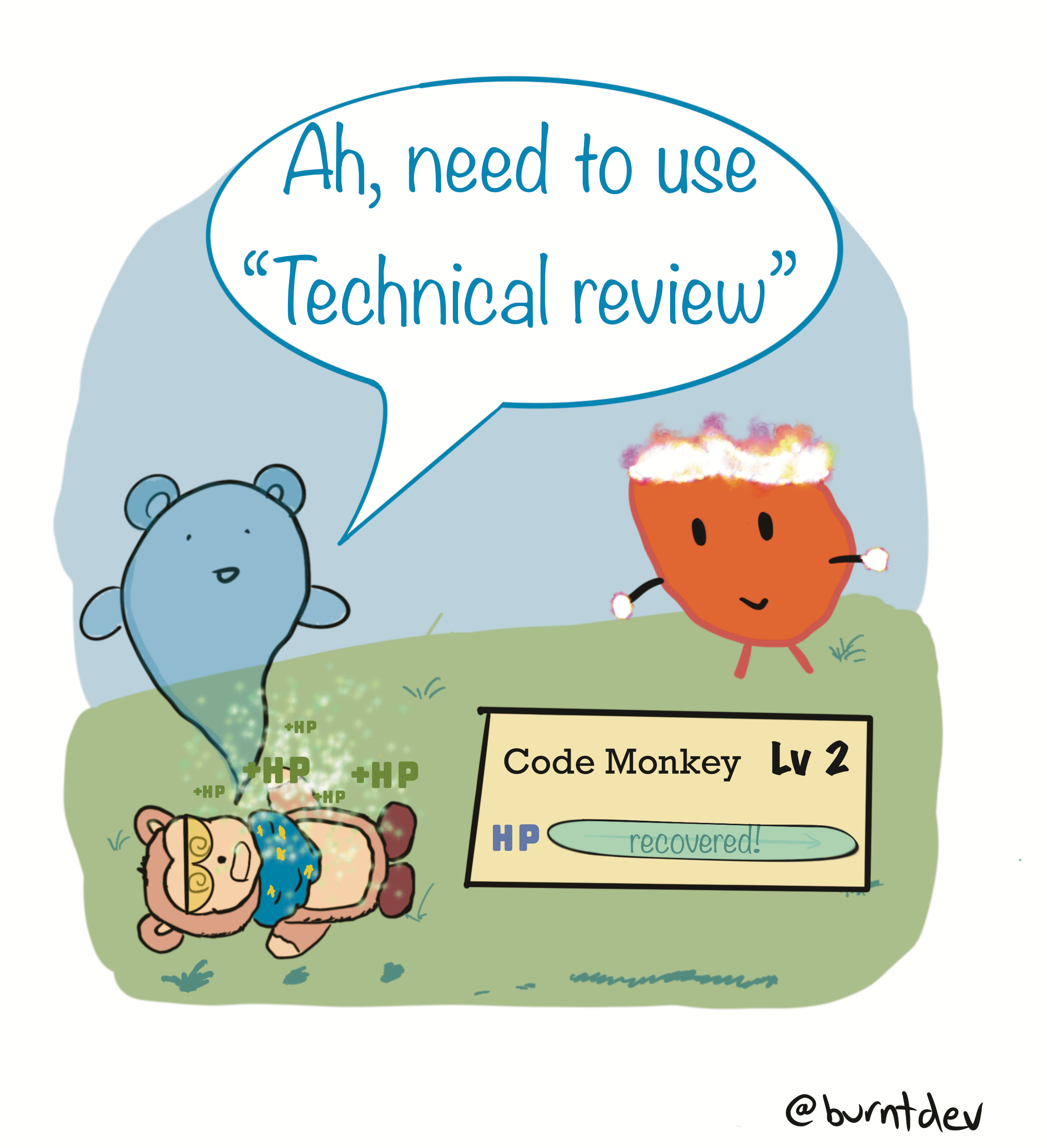
Loop this 6 months to 2 years. Eventually, it's time to level up again.
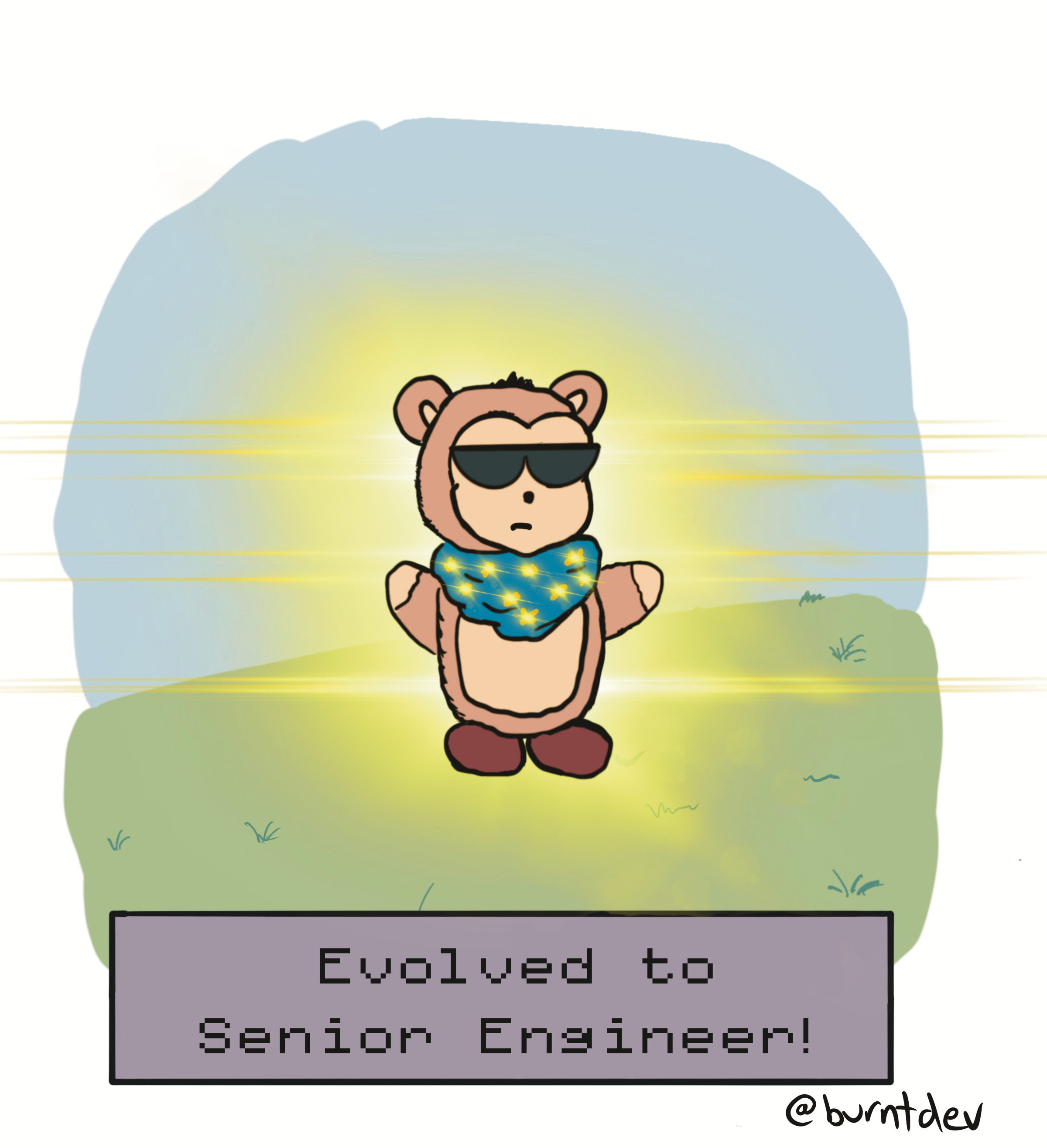
And again within the same 6 months to 2 years…
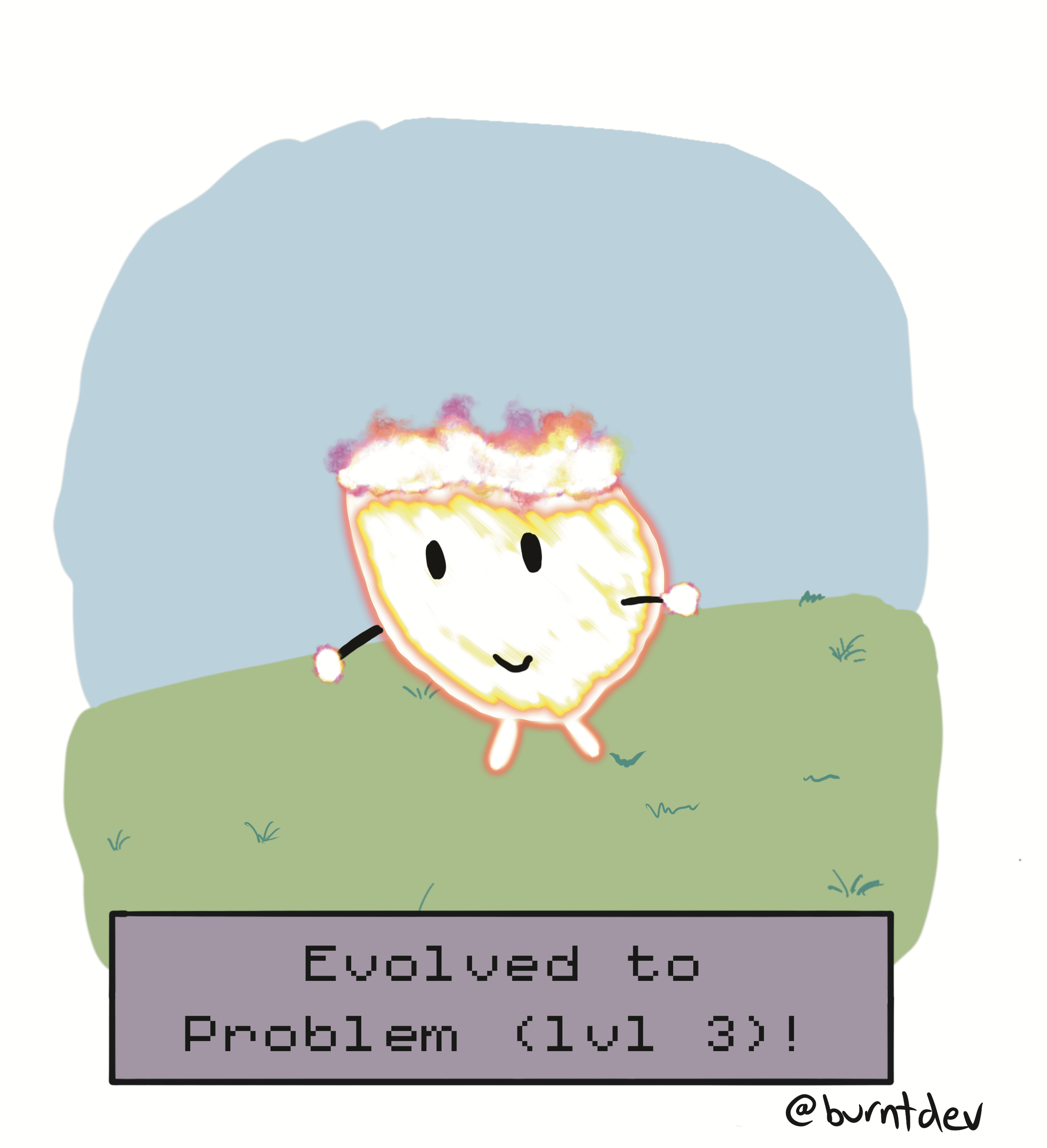
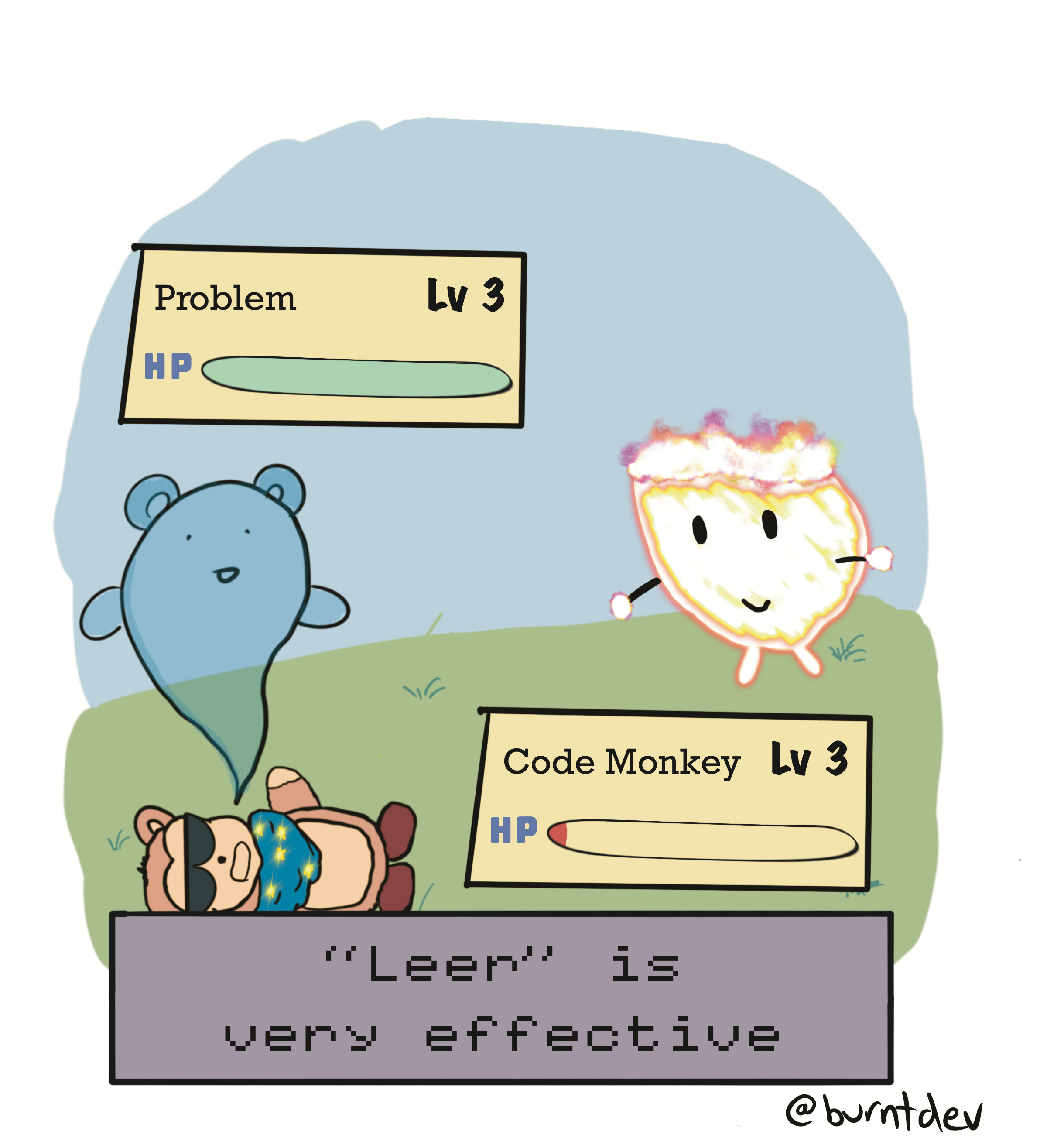
Even Technical Review gave out.
Over and over again, Code Monkey learns another skill to overcome the new problem.
Loop this 6 months to 2 years. Another evolution approaches…
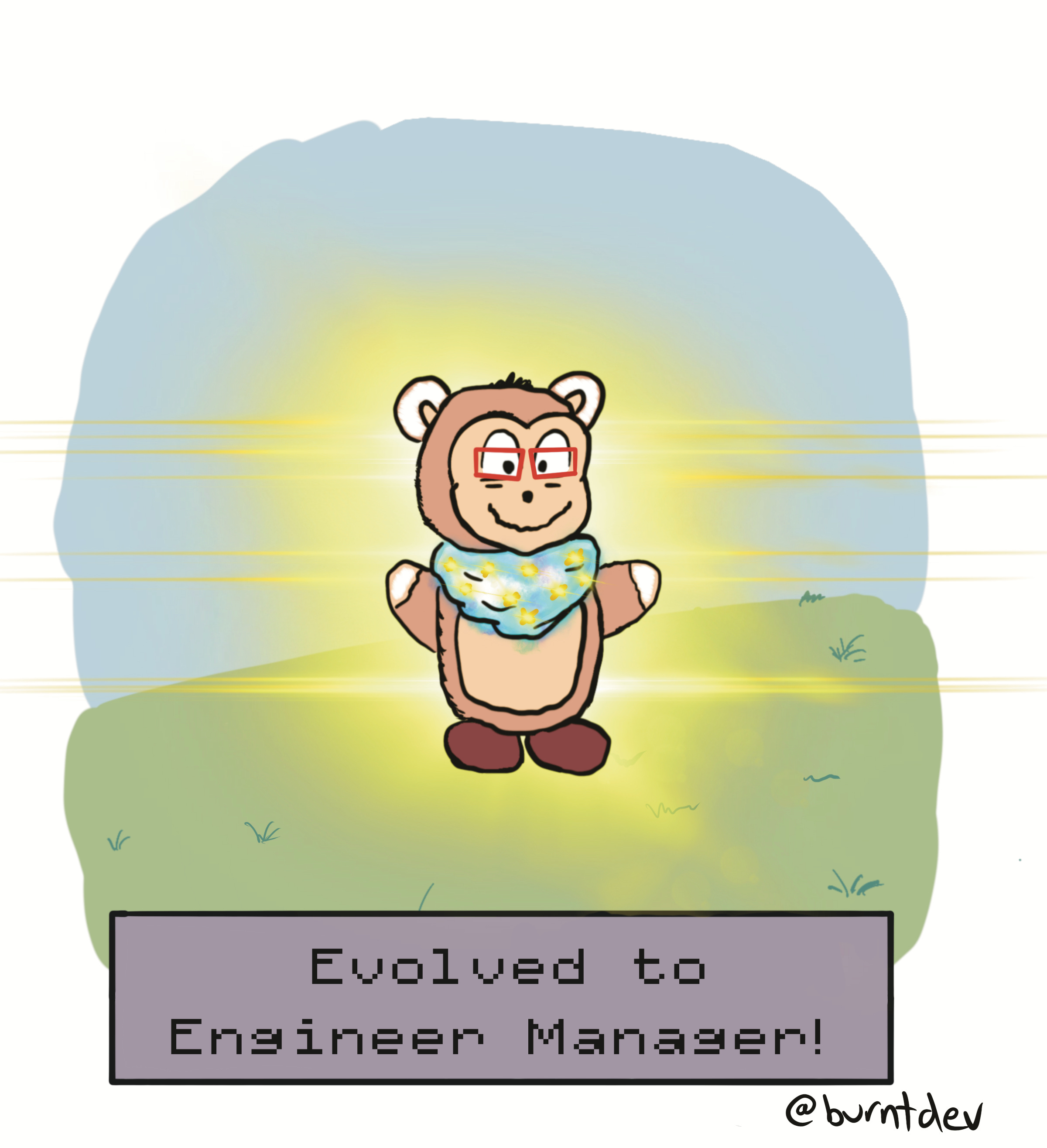
And then follows the Problem…
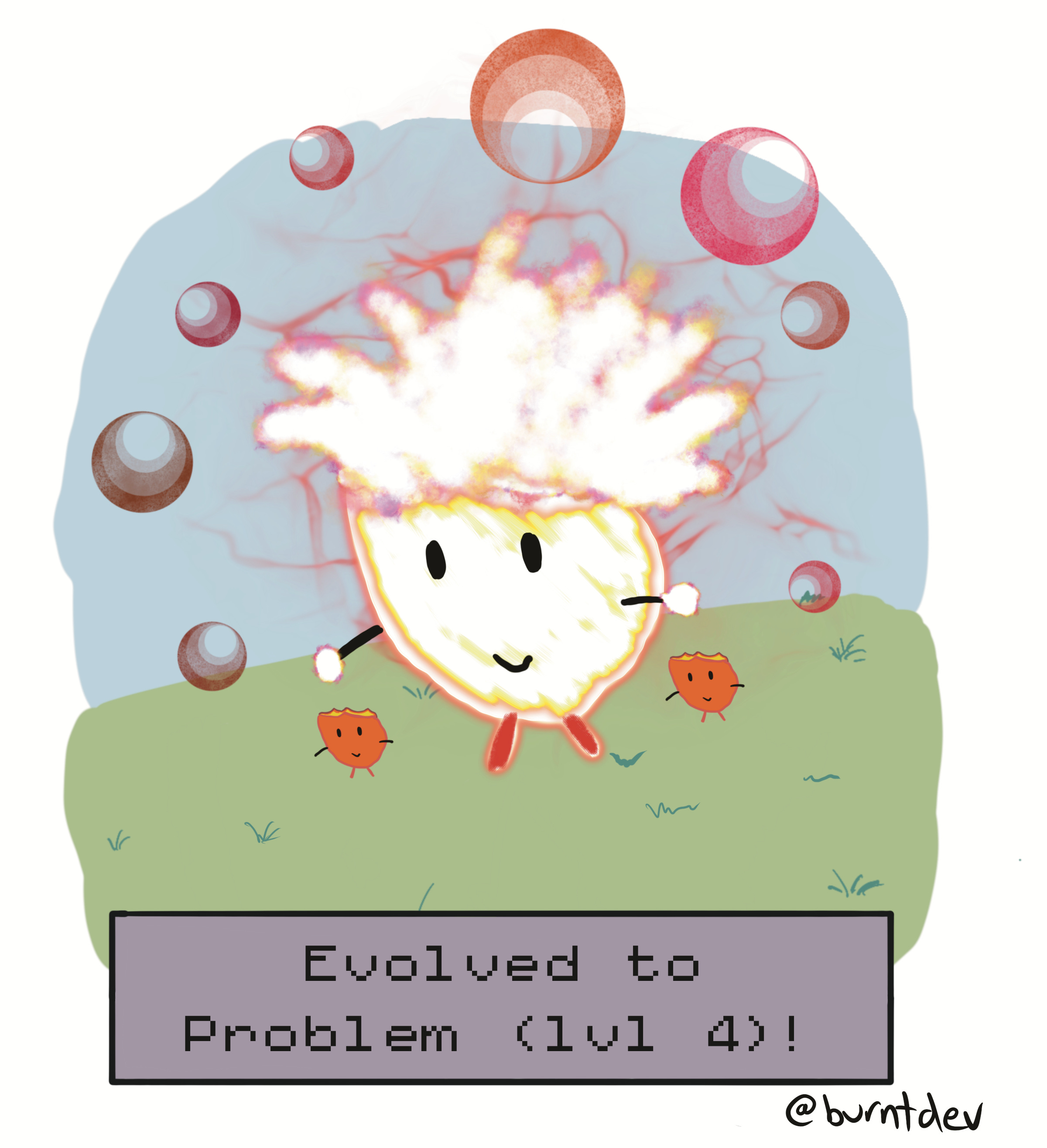
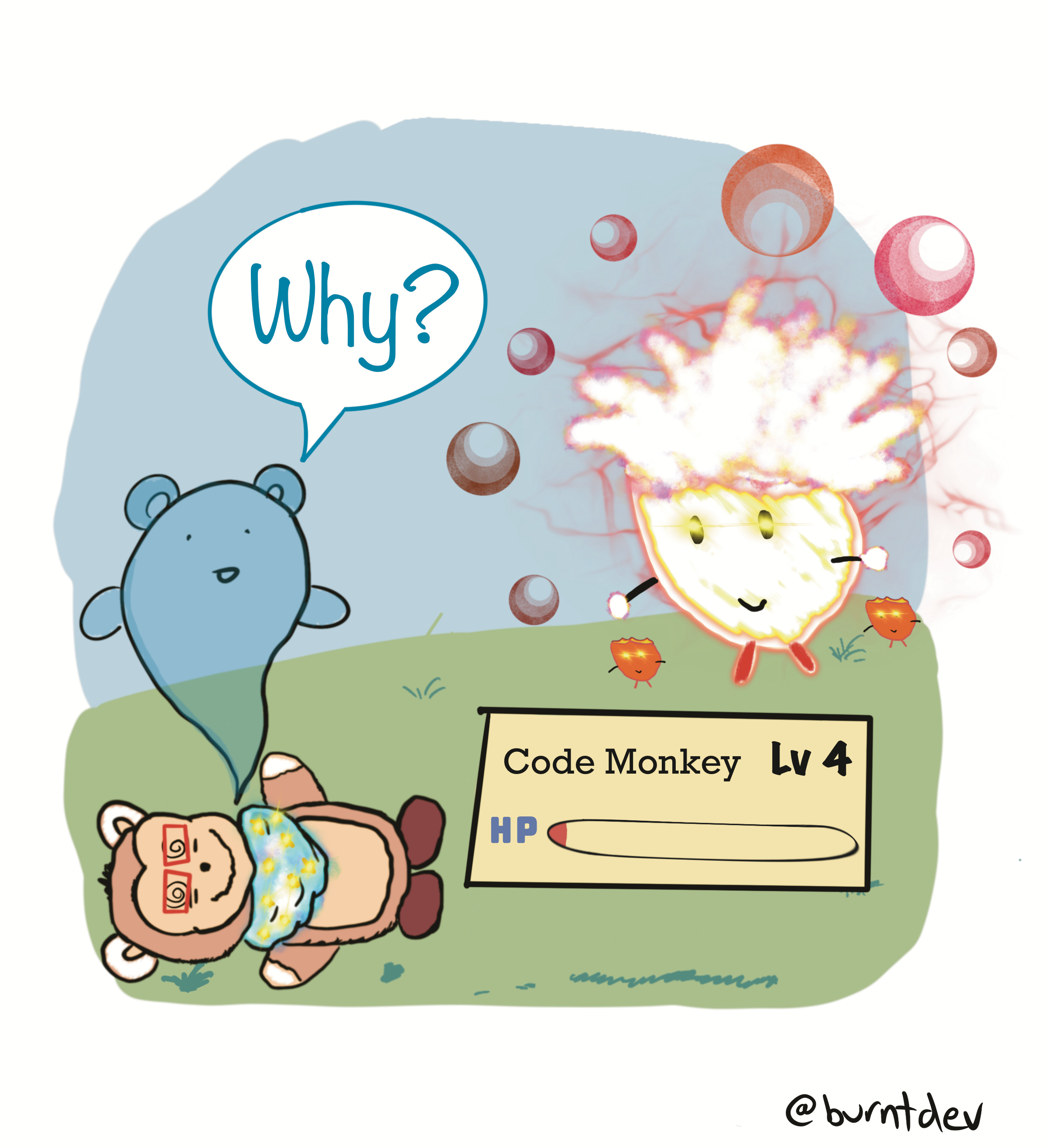
With every level, Code Monkey faced a new evolved problem. He made it to Engineer Manager and the cycle still didn’t stop.
The True Identity of Problems
As someone who was used to being a rule follower, I get tired when a rule no longer works and I have to go searching for another one.
So why do we feel discouraged when a new problem arises? Like any RPG, you may have beaten a boss, but sometimes the story later reveals who was really behind it all. Let’s see who was behind our problems this whole time.
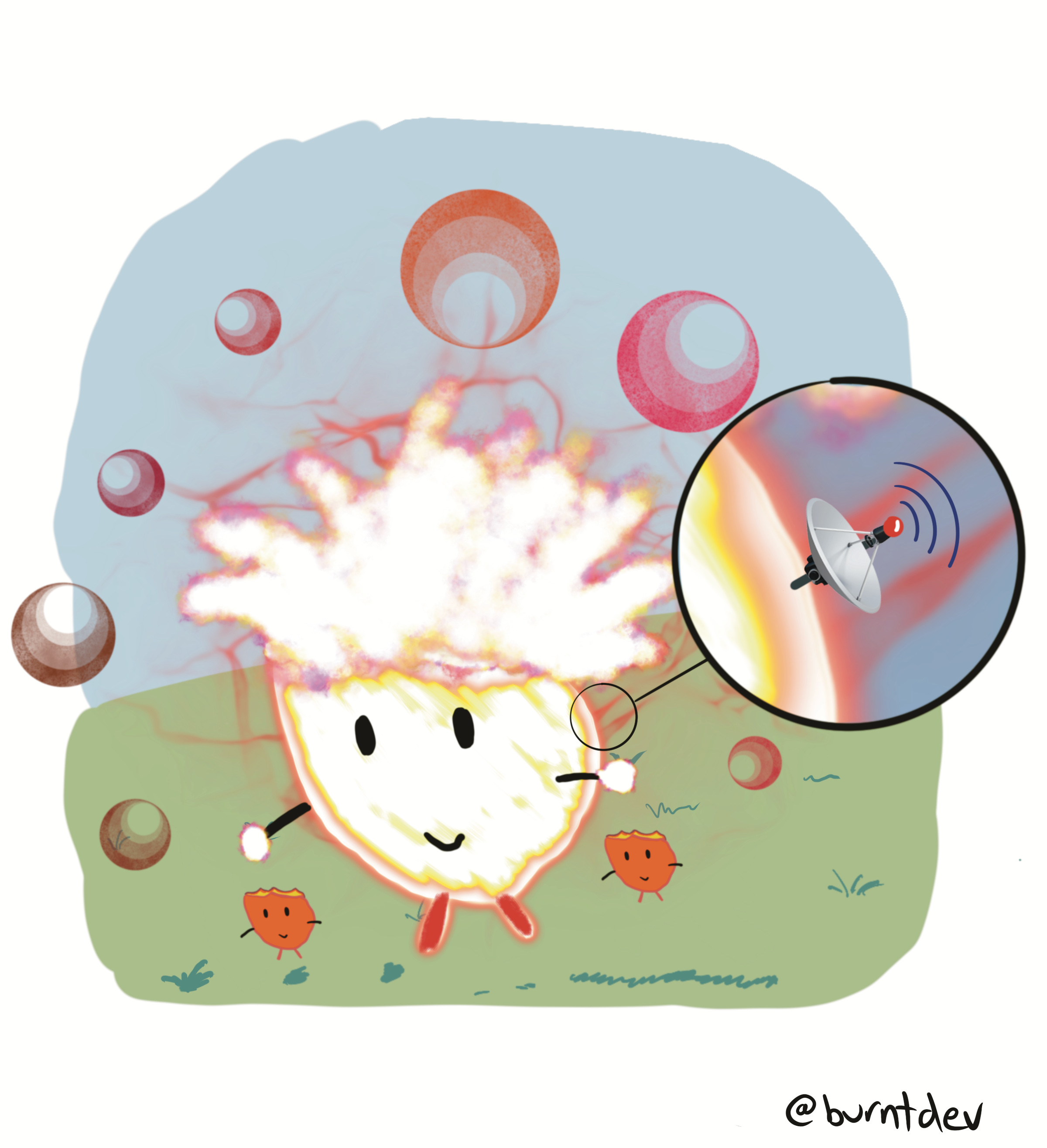
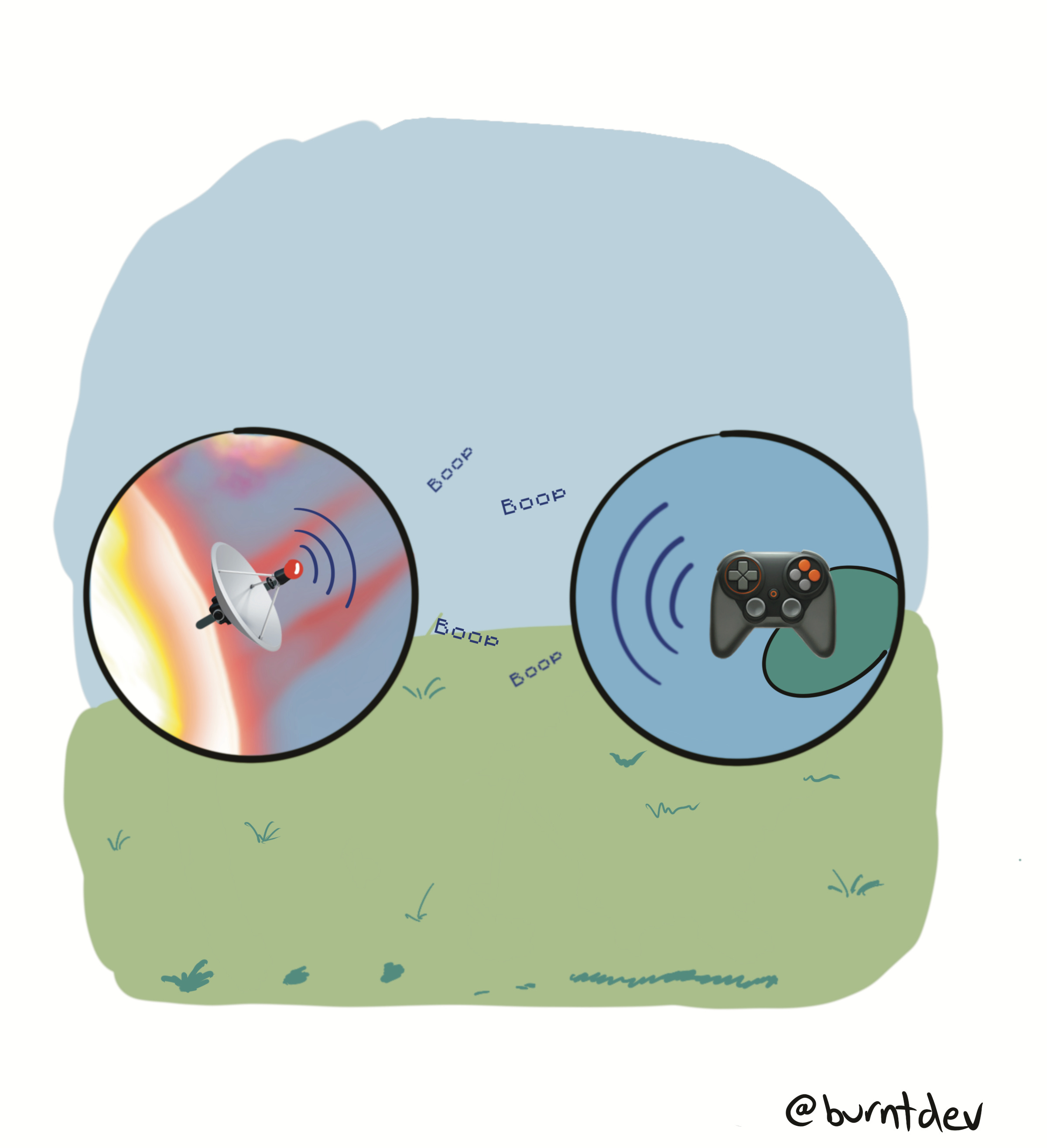
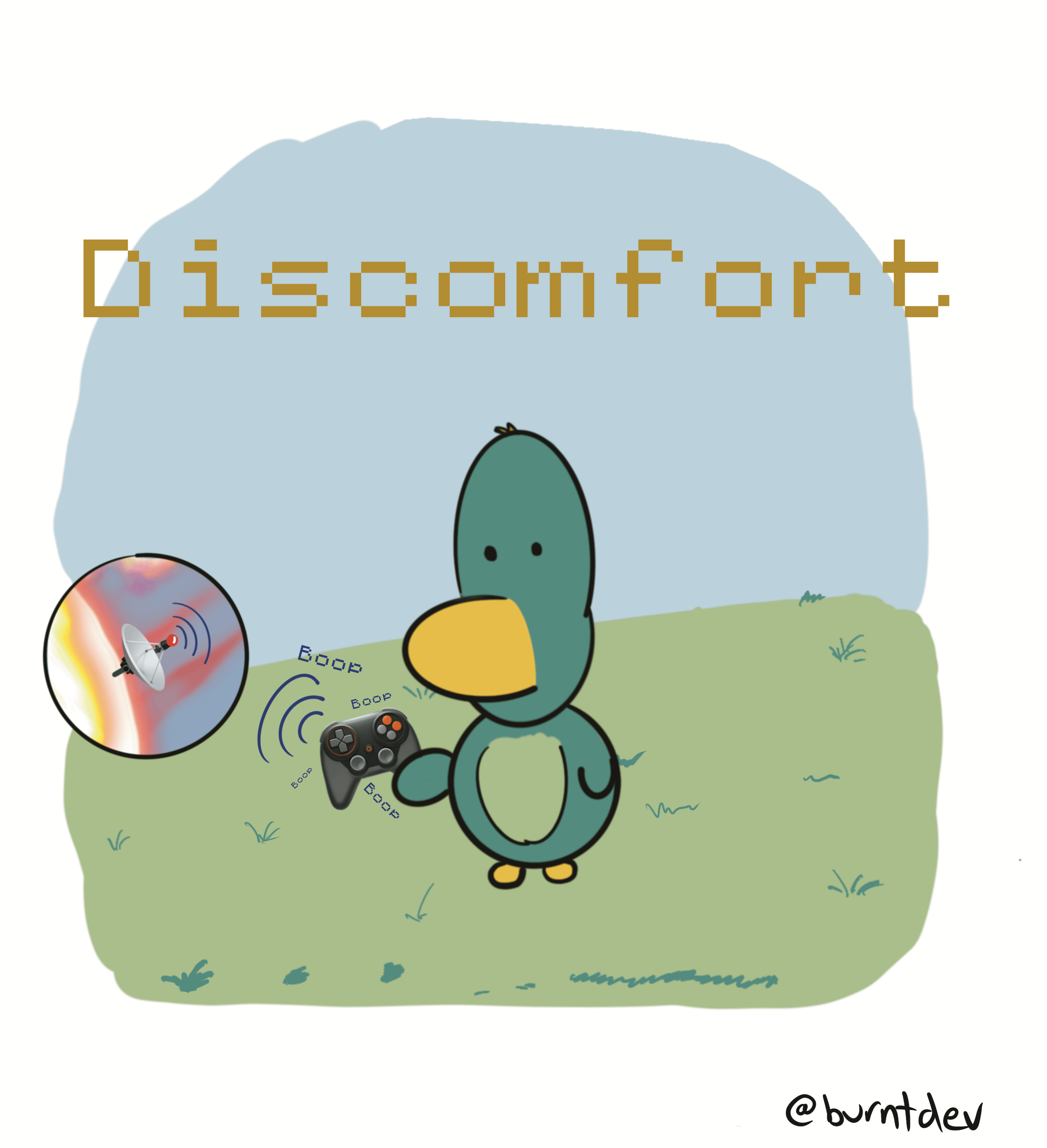
Discomfort
In my illustrations, the Problem never once attacked the hero. It only leered. It only existed.
“The Problem was never the real threat.
Discomfort was.”
When a problem has me stuck, I look for the answer outside myself. Sometimes I buy a book on self-improvement, thinking maybe the answers are in there. Sometimes I reach out to my manager or a mentor for advice. They may even give me a good answer. But it doesn’t change the fact that the problem is still mine to face.
Books and mentors can tell you what to do. They can’t do it for you.
If that feeling is familiar, you’re not alone in it. Discomfort is normal. We’ve dealt with it our whole lives:
While introducing yourself in a room where everyone already knows each other.
While standing up when called on during jury duty.
While reading a book to a child, more nervous about the adults listening than the kid.
Here’s what took me years to see. Nobody knows what they’re doing the first time. The discomfort is that not-knowing. It never fully goes away, because every level hands you something new you haven’t done before.
So for my own sanity, I stopped trying to make it go away and reframed it instead.
“Discomfort leads to experience points.
The bigger the challenge, the more experience gained.”
A career is full of repetition, at every scale. Like exposure therapy, you build tolerance for what used to feel unfamiliar. The reps are the point. You don’t retreat from the discomfort. You face it, round after round, and the experience compounds.
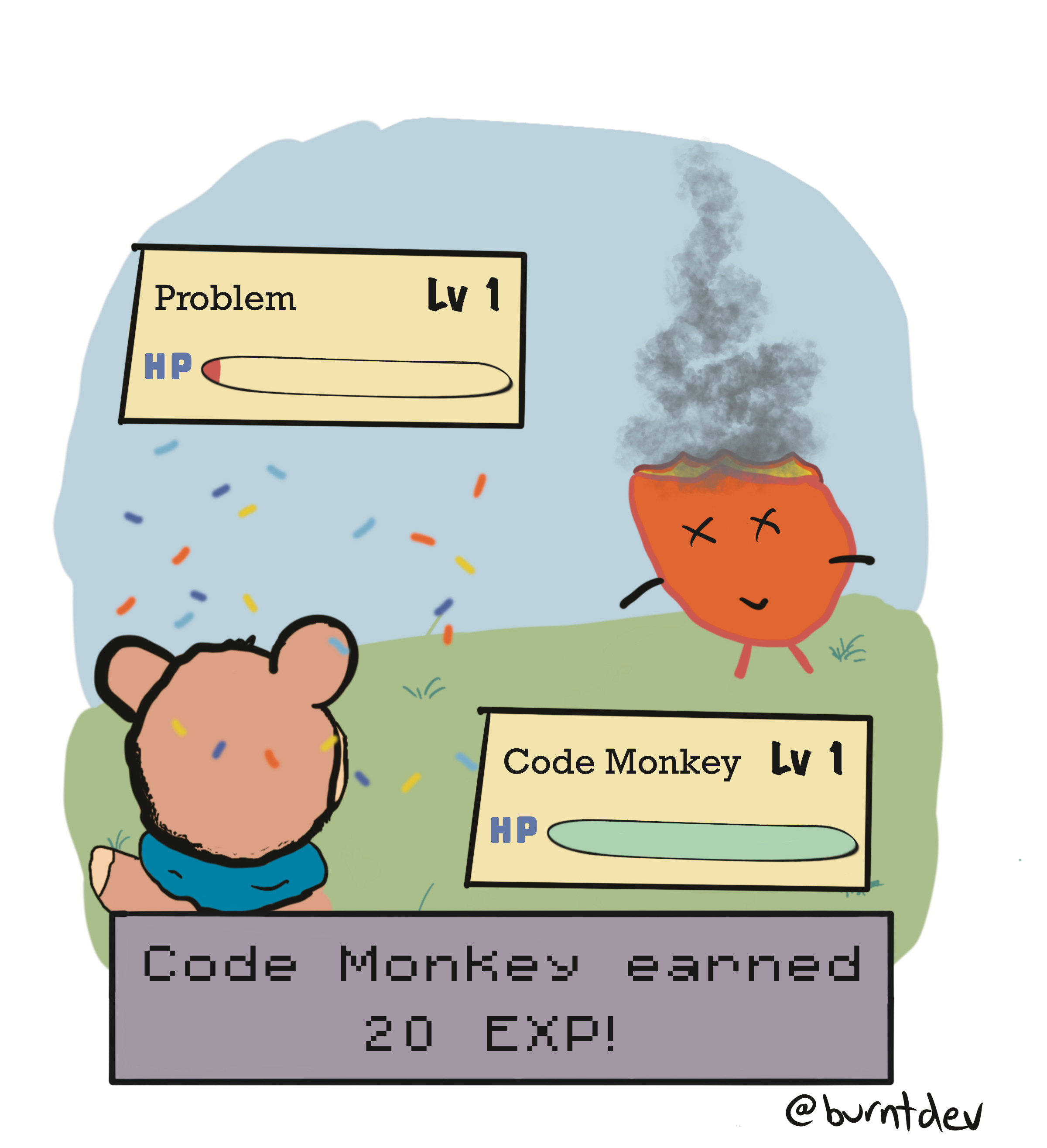
I don’t write rules on post-it notes anymore. But once I saw it was discomfort scaling with me all along, I started building one last rule. Not a rule for what to do this time. A rule for when I don’t know what to do at all.
“Trust that discomfort turns into experience.”
Maybe that’s the only skill that never becomes ineffective.